
Enrol an adult in Mental Health First Aid (MHFA) Supporting Youth, locate your nearest Integrated Youth Services (IYS) walk-in hub, and call Kids Help Phone (1-800-668-6868) or text CONNECT to 686868 if a young person needs support right now. Those three steps are where prevention-focused youth empowerment programs begin in Canada.
Do these in the next hour:
- Search "Youth Wellness Hub" plus your city or province to find a no-referral, walk-in location near you.
- Register for the next available MHFA Supporting Youth course (10 hours total, available virtually across Canada).
- If a young person in your life is in distress today, call 988 (Suicide & Crisis Lifeline) or Kids Help Phone before doing anything else.
Pro Tip: You do not need to have the perfect words. You need to be present and know who to call. That is the whole job right now.
Key takeaways
Early intervention in youth mental health works best when trained adults, low-barrier services, and simple safety tools operate together rather than in isolation.
| Point | Details |
|---|---|
| Train an adult now | MHFA Supporting Youth is 10 hours, available virtually, and teaches the ALGES Action Plan. |
| Use walk-in services | IYS / Youth Wellness Hubs require no referral and are often free for youth aged 12–25. |
| Know the crisis line | Kids Help Phone (1-800-668-6868) and 988 are available 24/7 for immediate support. |
| Training is not therapy | MHFA builds first-aid skills; clinical pathways like CARIBOU handle structured treatment. |
| The MentorWell | Offers a free Teen Signal Check, workshops, and a parent peer community as a prevention-first starting point. |
This article is general information, not a substitute for advice from a qualified doctor. Consult a qualified healthcare professional about your own circumstances before acting on anything here.
Table of Contents
- What do youth empowerment programs actually do for mental health?
- What early warning signs and crisis red flags should you watch for?
- Where can you access low-barrier early-intervention services in Canada?
- How should parents and employers choose a training or programme?
- What concrete steps can you take in the next 24–72 hours?
- Which programmes and tools can you use right now?
- Does the evidence support these approaches?
- What does The MentorWell offer, and how does it work?
- How do you measure whether a youth empowerment programme is working?
- How do you get young people involved in designing these programmes?
- How do you make these programmes work for diverse communities?
- What barriers keep young people and families from participating?
- What happens after a programme ends?
- A father's note
- The MentorWell: a practical next step for parents and employers
- Sources
- FAQ
What do youth empowerment programs actually do for mental health?
The phrase "youth empowerment programs" covers a wide range of initiatives online. Here, it means something specific: prevention-focused training and services that equip parents, caregivers, managers, and young people themselves to recognise early emotional distress, respond with care, and connect to professional help before a crisis forms.
These programs build what researchers call human infrastructure. An adult who completes MHFA Supporting Youth learns the ALGES Action Plan: Assess for risk, Listen non-judgementally, Give reassurance and information, Encourage professional help, and encourage Self-help strategies. That is not therapy. It is a structured, repeatable way to stay calm and useful when a young person is struggling.
The limits matter as much as the skills. Training helps adults notice the signs, hold a conversation, and make a referral. It does not replace a psychologist, a psychiatrist, or a structured clinical pathway. Adults who understand that boundary are more useful, not less.
Pro Tip: Adult regulation is a core skill in MHFA. If you are flooded with your own anxiety, you cannot hold space for a teenager. The training addresses this directly.
What early warning signs and crisis red flags should you watch for?
Recognise the changes that matter, then act on them. The difference between an early warning sign and a crisis red flag is the difference between a conversation and a 911 call.
Early warning signs (prompt a check-in):
- Persistent low mood, irritability, or emotional flatness lasting more than two weeks.
- Withdrawal from friends, family, or activities they used to love.
- Declining school or work performance without a clear external cause.
- Changes in sleep, appetite, or energy that are new and sustained.
- Increased secrecy, giving away possessions, or saying goodbye in unusual ways.
Crisis red flags (act immediately):
- Any direct or indirect talk of suicide or not wanting to be alive.
- Self-harm that is escalating or requires medical attention.
- Severe disorientation, paranoia, or loss of contact with reality.
- Acute substance intoxication combined with emotional collapse.
Knowing what a mental health crisis looks like in a young person is the first practical skill any adult can develop.
If you are in a crisis situation right now:
- Kids Help Phone: 1-800-668-6868 or text CONNECT to 686868
- 988 Suicide & Crisis Lifeline: call or text 988
- Emergency services: 911 for immediate physical danger
According to School Mental Health Ontario, parents should also contact school support teams and family physicians as early contact points before a situation escalates.
Pro Tip: Before a hard conversation, take three slow breaths. Your nervous system sets the tone. A regulated adult is the single most calming thing a distressed teenager can encounter.
Where can you access low-barrier early-intervention services in Canada?
Low-barrier Integrated Youth Services and MHFA training are the fastest leverage points in the Canadian system.
| Programme | Access model | Typical timeline |
|---|---|---|
| IYS / Youth Wellness Hub | Walk-in, no referral required, free | Same day to within days |
| CAMH Slaight Centre EIS | Referral-based (Toronto) | Initial consult within ~2 weeks |
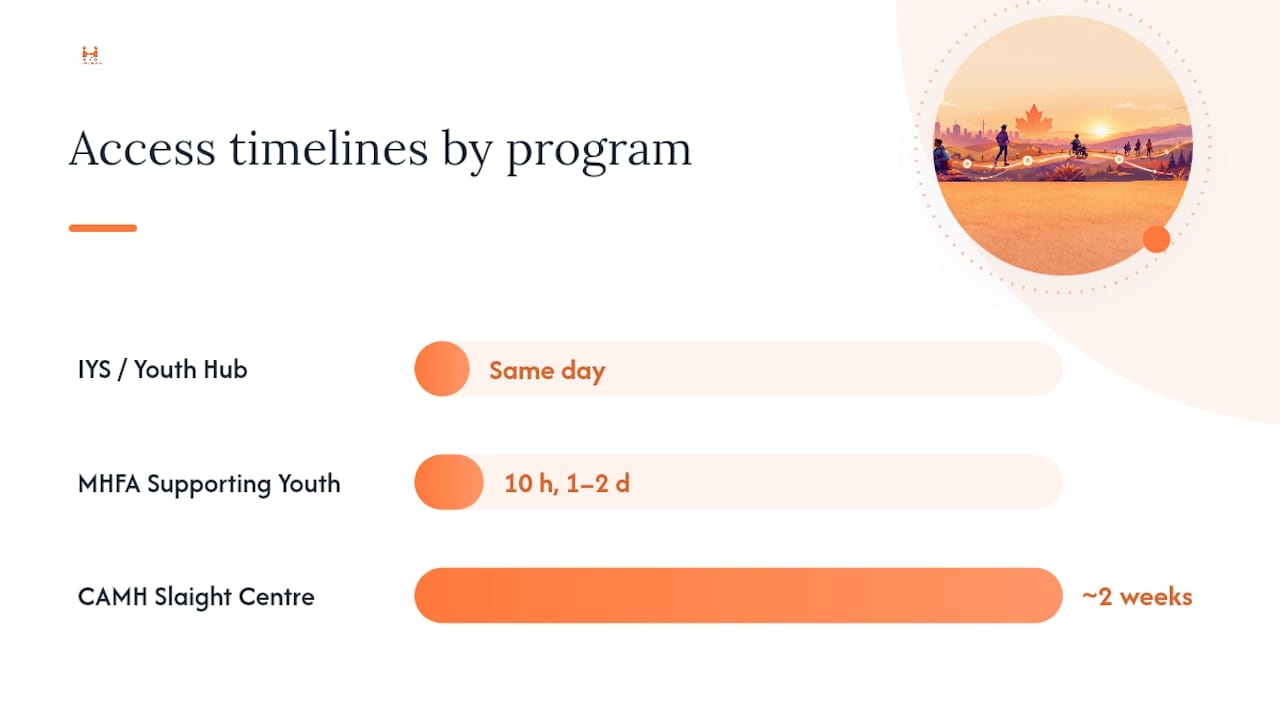
IWK Health's IYS model describes the one-stop, walk-in design that removes the referral barrier entirely. Youth aged 12–25 can walk in without an appointment, without a diagnosis, and without a doctor's note. That model now operates across multiple provinces.
The CAMH Slaight Centre is a Toronto-based early psychosis intervention service. It aims to offer an initial consultation within roughly two weeks of referral and can provide up to three years of outpatient care where clinically indicated. It also includes family education, supported employment, and peer support as part of comprehensive care.
To find your nearest Youth Wellness Hub, search the provincial health authority website for your region or visit the IYS directory. For mental health resources for young employees, employer-specific listings are available through the Mental Health Commission of Canada.
How should parents and employers choose a training or programme?
Not every programme fits every situation. Before you register or book, ask these questions.
Evaluation checklist:
- Audience fit: Does it serve the age group you are supporting (8–12, 13–17, 18–25)?
- Format: Is in-person or virtual delivery more realistic for your schedule?
- Time and cost: Can you commit the hours? MHFA is 10 hours. Some workshops run half a day.
- Cultural competency: Does the programme reflect the backgrounds of the youth it serves?
- Youth involvement: Were young people involved in designing the content?
- Measurement: Does the provider track outcomes, even simple pre/post confidence scores?
Red flags to avoid:
- Any programme that claims to train non-clinicians to provide therapy.
- Vague follow-up support with no clear referral pathway built in.
- No evidence of youth input in the curriculum design.
Understanding the benefits of youth mental health training helps parents set realistic expectations before they commit time and money. For employers, research from the Mental Health Commission of Canada suggests that workplace mental health investments can return roughly 2–7 times the cost over a five-year period.
Pro Tip: Ask the provider: "What does a participant do differently after this training?" If the answer is vague, the programme probably is too.
What concrete steps can you take in the next 24–72 hours?
Start here. One action today is worth ten plans next month.
Family safety check (sequential steps):
- Name one trusted adult the young person can contact at any hour.
- Agree on a simple check-in signal (a text, a word, a knock) that means "I need to talk."
- Remove or secure any means of self-harm in the home.
- Write down Kids Help Phone (1-800-668-6868) and 988 on the fridge or in the young person's phone.
- Book a GP appointment within the week if you have noticed warning signs.
Sample conversation opener (home): "I've noticed you seem quieter lately. I'm not here to fix anything. I just want you to know I'm paying attention."
Sample opener (workplace): "We want this to be a place where you can say when things are hard. If you ever need support, here's who to contact."
Workplace quick wins:
- On day one of onboarding, name the mental health resources available.
- Train at least one supervisor in MHFA Supporting Youth.
- Post Kids Help Phone and 988 in common areas and on the intranet.
How managers can support youth mental health at work covers the supervisor training conversation in more depth. For a full policy framework, building a teen mental health policy at work provides step-by-step guidance.
Pro Tip: Silence isn't safety. A young person who hears nothing from the adults around them learns that their distress is not worth naming.
Which programmes and tools can you use right now?
Priority trainings and tools:
- MHFA Supporting Youth (Mental Health Commission of Canada): 10 hours total (2-hour self-directed module plus two 4-hour sessions). Teaches the ALGES Action Plan. Available virtually across Canada. The clearest starting point for any adult.
- Opening Minds / TIM and Headstrong (MHFA Canada): School and community-based programmes that normalise mental health conversations and reduce stigma among young people. Designed for classroom and community delivery.
- CARIBOU Pathway (CAMH): An evidence-based integrated care pathway for adolescent depression using measurement-based care and structured psychosocial sessions, with up to eight caregiver support sessions included. Relevant once a young person screens into moderate or severe symptoms.
- Teen Signal Check (The MentorWell): A free digital assessment for parents and caregivers to identify subtle warning signs in youth aged 8–25. Takes minutes. Designed as an early-detection tool, not a diagnostic instrument.
- The MentorWell workshops and parent peer community: Structured workshops for families and employers, live and on-demand coaching, and a community of parents navigating the same terrain.
Early intervention mental health explained for parents walks through how these tools fit together in a prevention pathway.
Does the evidence support these approaches?
Approximately 70% of mental-health problems in youth begin before age 25. That single figure is the case for everything in this article. The window for early intervention is real, and it closes.
MHFA's format and purpose are well-defined: it builds first-aid capacity in adults, not clinical skill. That is the right tool for the right job. The CARIBOU Pathway and Slaight Centre represent the clinical tier that follows when a young person needs structured treatment.
Realistic limits:
- Training does not close service gaps in rural or remote communities.
- Wait times for specialist care remain a barrier in many provinces.
- Cultural and socioeconomic factors affect uptake; programmes designed without community input often miss the people who need them most.
Simple local measurement:
Track training uptake, number of safety plans completed, referrals made, and short pre/post confidence surveys for adults. Those four metrics tell you whether the programme is landing, without requiring a research team.
What does The MentorWell offer, and how does it work?
The MentorWell was founded by Chris Coulter in memory of his daughter Maddie. The work exists because Chris spent years watching what happens when adults miss the signs, and decided to say plainly what he would do differently.
Services:
- Teen Signal Check: Free digital assessment for parents and caregivers. Identifies subtle warning signs in youth aged 8–25.
- Workshops: For employers and families. Prevention-focused, practical, and grounded in Canadian evidence.
- Live and on-demand coaching: For parents and managers navigating a young person's distress in real time.
- Parent peer community: Connection with other families who understand what this actually feels like.
- Family mentorship programmes: Longer-term support for households working through sustained concern.
Run a free Teen Signal Check or book a workshop at thementorwell.com.
How do you measure whether a youth empowerment programme is working?
Measurement does not require a research budget. The most useful metrics are the ones any school, employer, or family can track without specialist tools.
Track how many adults completed training. Note how many safety plans were created and whether they were actually used. Count referrals made to IYS hubs, Kids Help Phone, or clinical services. Run a short confidence survey before and after a workshop: "How confident are you that you would notice a warning sign?" and "How confident are you that you would know what to do?" A shift in those two scores is meaningful signal.
For clinical programmes like CARIBOU, measurement-based care is built into the pathway itself. Structured psychosocial sessions include regular symptom tracking, so progress is visible to both the clinician and the family.
How do you get young people involved in designing these programmes?
Programmes designed without youth input tend to miss the mark. Young people know which conversations feel safe, which formats feel condescending, and which adults they actually trust. Involving them in design is not a courtesy; it is a quality control measure.
Opening Minds and MHFA's youth training programmes explicitly emphasise youth engagement as integral to relevance and uptake. Practical ways to build this in: include youth advisors in curriculum review, pilot new content with a small group before full rollout, and create formal feedback loops after each session.
For school-based programmes, classroom mental health literacy modules that teach stress recognition and help-seeking behaviours work best when students help shape the language and examples used.
How do you make these programmes work for diverse communities?
Canada is not one community. A programme that works in a mid-sized Ontario city may land very differently in a northern First Nations community, a newcomer settlement in Vancouver, or a francophone household in rural New Brunswick.
Cultural competency means more than translating materials. It means asking whose voices shaped the content, whose experiences are centred, and whether the programme's assumptions about family structure, help-seeking, and authority match the community it is entering. Stigma around mental health varies significantly across cultural backgrounds, and a programme that ignores that will see low uptake regardless of its clinical quality.
Practical steps: partner with community organisations before designing content, hire facilitators from within the community where possible, and build in explicit stigma-reduction components. School hygiene and safety practices in institutions offer a parallel example of how institutional programmes must account for community-specific norms to be effective.
What barriers keep young people and families from participating?
Cost, geography, and stigma are the three most consistent barriers. A family managing financial stress is unlikely to pay for a workshop. A youth in a rural community may have no IYS hub within two hours. A teenager from a background where mental health is not discussed openly may never name what they are experiencing.
Low-barrier design addresses the first two directly: free walk-in IYS hubs remove cost and referral barriers, and virtual MHFA delivery removes geography as an obstacle. Stigma requires a longer game. Normalising mental health conversations in schools, workplaces, and families over time is what shifts the culture. That is exactly what programmes like Opening Minds and Headstrong are built to do.
The ages 18–25 carry a specific risk: young people lose the structure and support of school without yet having workplace supports in place. Employer onboarding is a critical intervention point that most organisations still miss.
What happens after a programme ends?
A workshop or course is a beginning, not a solution. The adults who complete MHFA Supporting Youth need somewhere to go with what they learned. The young people who participate in school-based programmes need ongoing access to the conversations those programmes started.
Follow-up support looks different at each level. For families, it means maintaining the check-in habits and safety plans established during training. For employers, it means embedding mental health resources into regular onboarding and performance conversations, not just a one-time workshop. For clinical pathways like the Slaight Centre, up to three years of outpatient care is available where clinically indicated, with family education and peer support built in.
The CARIBOU Pathway's model of measurement-based care is instructive here: structured follow-up, regular symptom checks, and caregiver sessions built into the pathway mean that progress is tracked and support does not simply evaporate after the first appointment.
A father's note
I missed things I should not have missed. I know that now. I knew it then, too, somewhere underneath the noise of a normal week.
What I would do differently is pay attention earlier. Not with alarm. Just with presence. A question at dinner that is not about homework. A drive somewhere with no destination. Sitting on the dock in the morning and letting the silence be comfortable enough that something real might come out of it.
The programmes in this article exist because the window is real. It opens early and it does not stay open. You do not need to be a clinician. You need to be paying attention, and you need to know who to call.
Run the Teen Signal Check tonight. Book a workshop this week. That is where it starts.
The MentorWell: a practical next step for parents and employers
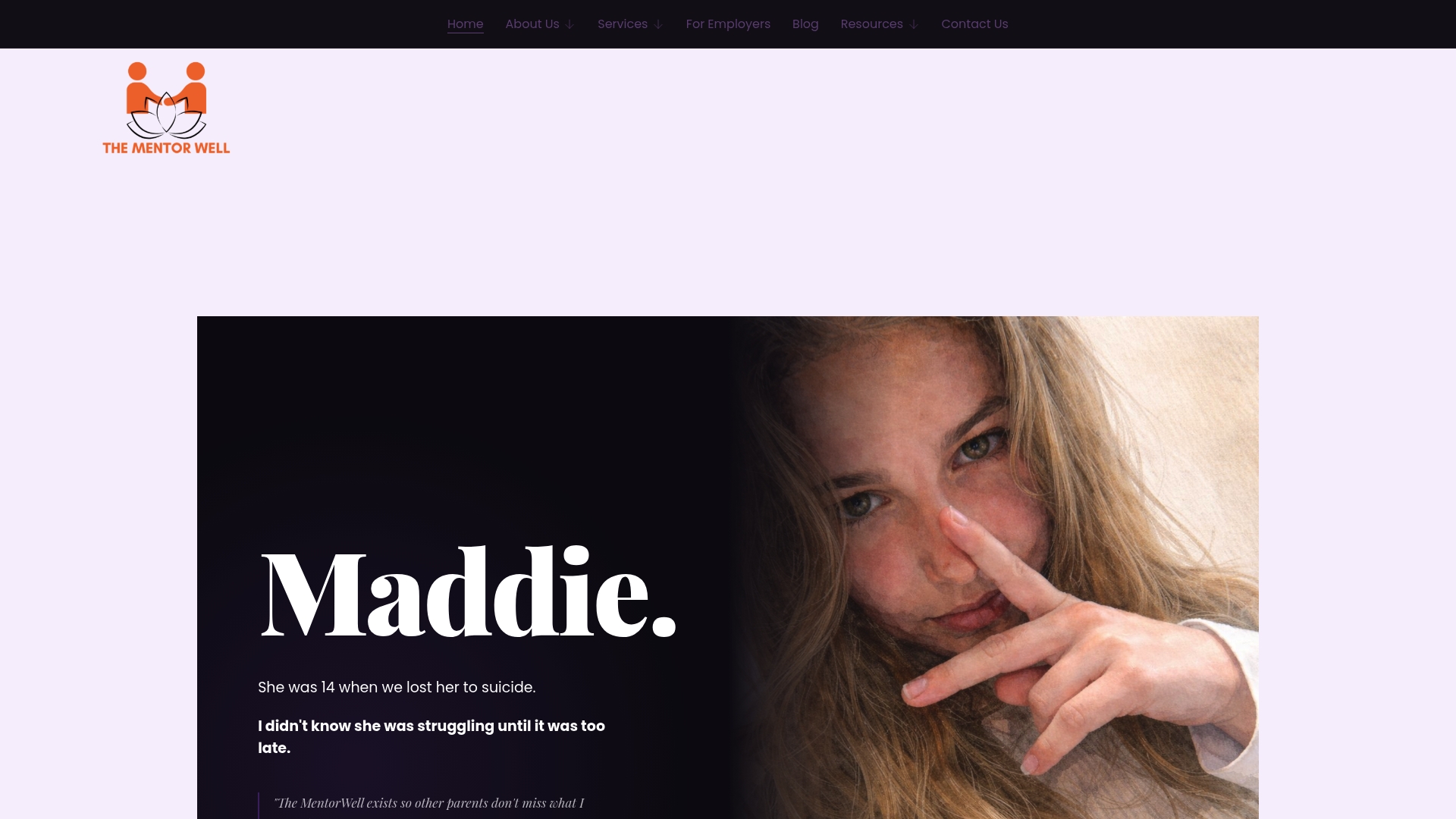
The MentorWell offers parents and employers in Canada a clear, practice-first path into prevention. The free Teen Signal Check takes minutes and gives you a concrete starting point. The workshops, built for both family and corporate settings, cover early detection, supportive conversation, and connection to care, without asking anyone to become a therapist. The parent peer community means you are not navigating this alone at midnight.
If you are an HR professional looking to protect young workers, or a parent who noticed something this week and is not sure what to do next, visit The MentorWell to run a free assessment or book a workshop.
Sources
- Slaight Centre Early Intervention Service — CAMH
- Noticing mental health concerns for your child — School Mental Health Ontario
FAQ
What is the MHFA Supporting Youth course in Canada?
The Mental Health First Aid Supporting Youth course is a 10-hour programme (a 2-hour self-directed module plus two 4-hour sessions) that teaches adults the ALGES Action Plan for recognising and responding to mental health concerns in young people. It is not clinical training and does not qualify participants to provide therapy.
How do I find a Youth Wellness Hub near me?
Search "Youth Wellness Hub" plus your province or city, or check your provincial health authority's website. Most hubs offer walk-in access for youth aged 12–25 with no referral and no cost.
When should I call Kids Help Phone versus 911?
Call Kids Help Phone (1-800-668-6868) or 988 when a young person is in distress but not in immediate physical danger. Call 911 when there is an immediate risk to life, such as an active suicide attempt or a medical emergency.
What does The MentorWell's Teen Signal Check do?
The Teen Signal Check is a free digital assessment from The MentorWell that helps parents and caregivers identify subtle warning signs of emotional distress in youth aged 8–25. It is a screening tool, not a clinical diagnosis, and is designed to prompt a conversation or a referral rather than replace professional assessment.
How long does it take to see results from early-intervention programmes?
Walk-in IYS services can connect a young person to support the same day. The CAMH Slaight Centre aims to offer an initial consultation within roughly two weeks of referral. Skill-building in adults through MHFA typically shows measurable confidence gains immediately after the 10-hour course, with sustained behaviour change depending on ongoing practice and follow-up.