
Over 1.25 million Canadian youth aged 15–24 require mental health support every year. Only 19% access services. That gap lives inside your workplace right now, in the quiet employee who stopped asking questions, the one who calls in sick on Mondays, the one who laughs a little too hard at nothing.
The mental health resources young employees need most are not posters in a break room. They are structured, accessible, and built into how you lead every single day. Here is what actually works in Canadian workplaces.
Primary resource categories for young workers:
- Employee Assistance Programmes (EAPs) with youth-accessible intake
- Mental health literacy training for supervisors and peers
- Peer support networks and mentorship programmes
- Digital tools and app-based check-in platforms
- Flexible scheduling policies aligned with school demands
- Crisis response protocols with clear escalation paths
- Psychological health and safety policies under CSA Z1003
Table of Contents
- How leadership shapes young workers' psychological safety
- How do you make mental health support actually accessible?
- Prevention strategies that actually build resilience in young workers
- What The MentorWell brings to early detection in the workplace
- How to handle a young employee mental health crisis
- What does Canadian law require for workplace mental health?
- How do you measure whether your mental health programme is working?
- The MentorWell supports what your EAP cannot
- FAQ
- Key takeaways
How leadership shapes young workers' psychological safety
Leadership is not a bystander role in mental health. The National Standard of Canada for Psychological Health and Safety in the Workplace (CSA Z1003) places explicit responsibility on organizations to build proactive, culture-wide strategies. That starts with whoever runs the team meeting on Tuesday morning.

Young workers prioritise psychological safety over financial perks when it comes to mental health support at work. They want to know someone will actually listen. A manager who normalises mental health conversations in one-on-ones does more than any wellness app.
Leadership practices that move the needle:
- Name mental health openly in team meetings, not just during crisis
- Ask direct, low-pressure questions: "How are you managing your workload this week?"
- Follow through when someone discloses distress. Silence after disclosure breaks trust permanently
- Model help-seeking behaviour yourself
- Communicate EAP and support options at onboarding, not just when someone is struggling
Silence is not safety. A young employee who never hears their manager mention stress or anxiety will not be the one who raises their hand first.
How do you make mental health support actually accessible?
Access is where most programmes fail. 52% of young workers cite cost as a barrier to mental health support, 45% cite wait times, and 25% of racialized youth report a lack of culturally relevant services. Those numbers describe a system that was not built with them in mind.

Young workers in precarious roles, part-time, seasonal, or temporary, often fall outside standard benefits coverage. They may not know what they are entitled to, and many will not ask. Clear communication of rights is not optional. It is the first layer of access.
Employees with group benefits scored 54% on mental health measures versus 42% for those without, per a 2026 Ipsos survey for RBC Insurance. That gap is preventable.
Steps to improve access for young employees:
- Extend EAP eligibility explicitly to part-time and seasonal staff
- Offer digital or text-based counselling options alongside traditional therapy
- Provide translated or culturally adapted resources for newcomer and racialized youth
- Post support information in physical spaces, not only on internal intranets
- Train HR staff to proactively connect young workers to resources, without waiting for a request
The youth mental health impact on productivity is well documented. Removing access barriers is not charity. It is sound management.
Prevention strategies that actually build resilience in young workers
Reacting to a crisis is not a mental health programme. Prevention means building awareness before the window closes. The three pillars that research consistently supports are literacy, early intervention, and capacity-building.
Mental health training that includes scripts for supervisors helps frontline managers engage early with young workers showing signs of distress. Most managers want to help. They just do not know what to say. Giving them the words changes everything.
For students balancing work and school, scheduling matters more than most employers realise. Jobs that interfere with academic demands worsen mental health outcomes, while schedules aligned with study commitments improve them.
Prevention strategies worth implementing:
- Deliver mental health literacy training annually for all supervisors
- Build peer support networks with trained youth champions
- Offer mentorship pairings that include wellbeing check-ins
- Use digital learning modules young workers can access on their own schedule
- Socialise your psychological health policy at every onboarding, not just in the handbook
Pro Tip: Script two or three specific phrases for your managers to use when they notice a young employee struggling. Something like: "I've noticed you seem quieter lately. I'm not asking you to share anything you're not comfortable with, but I want you to know I'm here." That sentence, said plainly, keeps more doors open than any policy document.
What The MentorWell brings to early detection in the workplace
The MentorWell was built from loss. Chris Coulter founded it after losing his daughter Maddie, after years of watching parents and employers miss the signals that were there all along. That is not a mission statement. That is the reason this work exists.
The platform's Teen Signal Check is a structured assessment tool designed to help parents, caregivers, and employers identify subtle early warning signs in youth aged 8–25. It is not a diagnostic instrument. It is a way of paying attention more precisely, before a quiet moment becomes a crisis.
What The MentorWell offers employers:
- Workshops on early detection of emotional distress in young workers
- Coaching for managers and HR professionals on youth mental health conversations
- Educational content that bridges family and workplace contexts
- A global community connecting those supporting young people through shared experience
- The Teen Signal Check tool for structured, early awareness
| Feature | Application for employers |
|---|---|
| Teen Signal Check | Identifies early warning signs in youth aged 8–25 |
| Manager workshops | Builds confidence for mental health conversations |
| Coaching programmes | Supports HR professionals in crisis-adjacent situations |
| Educational resources | Bridges parent and employer roles in youth wellbeing |
| Community network | Reduces isolation for those supporting struggling youth |
Pro Tip: Use The MentorWell's workshop content as part of your annual supervisor training cycle. Pair it with your existing EAP communication so managers leave with both the awareness and the referral pathway.
How to handle a young employee mental health crisis
A crisis is not the time to figure out your protocol. By then, the window is already narrowing. Every workplace needs a written, practised response plan before it is needed.
When a young employee discloses suicidal ideation or acute distress, the immediate steps are: stay calm, stay present, do not leave them alone, and connect them to a trained professional as quickly as possible. Canada's mental health crisis line is available 24 hours a day. The 988 Suicide Crisis Helpline is a direct, free resource for anyone in Canada.
After the immediate moment passes, document what occurred, follow up with the employee's consent, and debrief with your HR team. Young workers who experience a crisis and receive a thoughtful response from their employer are more likely to stay and recover. Those who are met with silence or awkwardness often leave.
What does Canadian law require for workplace mental health?
Under the Canada Occupational Health and Safety Regulations, federally regulated employers must take all reasonable steps to maintain a psychologically healthy and safe workplace. The CSA Z1003 standard is the national benchmark, covering everything from harassment prevention to workload management.
Provincial occupational health and safety legislation extends similar duties to most employers across Canada. Ontario's Occupational Health and Safety Act, for example, requires employers to address workplace harassment and violence, both of which carry significant mental health consequences for young workers. Duty to accommodate under the Canadian Human Rights Act also applies to mental health conditions, requiring employers to adjust working conditions up to the point of undue hardship.
Compliance is a floor, not a ceiling. The legal minimum does not produce a psychologically safe workplace. It just keeps you out of a tribunal.
How do you measure whether your mental health programme is working?
A programme that is never evaluated is just a budget line. Measuring effectiveness means tracking both leading indicators (training completion, EAP utilisation rates, manager confidence scores) and lagging ones (absenteeism, turnover, incident reports).
Survey young employees directly, anonymously, and regularly. Ask whether they know what support is available, whether they feel comfortable using it, and whether they trust their manager to respond well. Those three questions reveal more than any utilisation report.
Adjust based on what you find. A programme that is not meeting the needs of your racialized or LGBTQ2S+ young employees is not a finished programme. It is a starting point.
The MentorWell supports what your EAP cannot
Most EAPs are reactive. They wait for someone to call. The MentorWell works differently. It gives employers and managers the tools to notice, to say something, and to act before the crisis arrives.
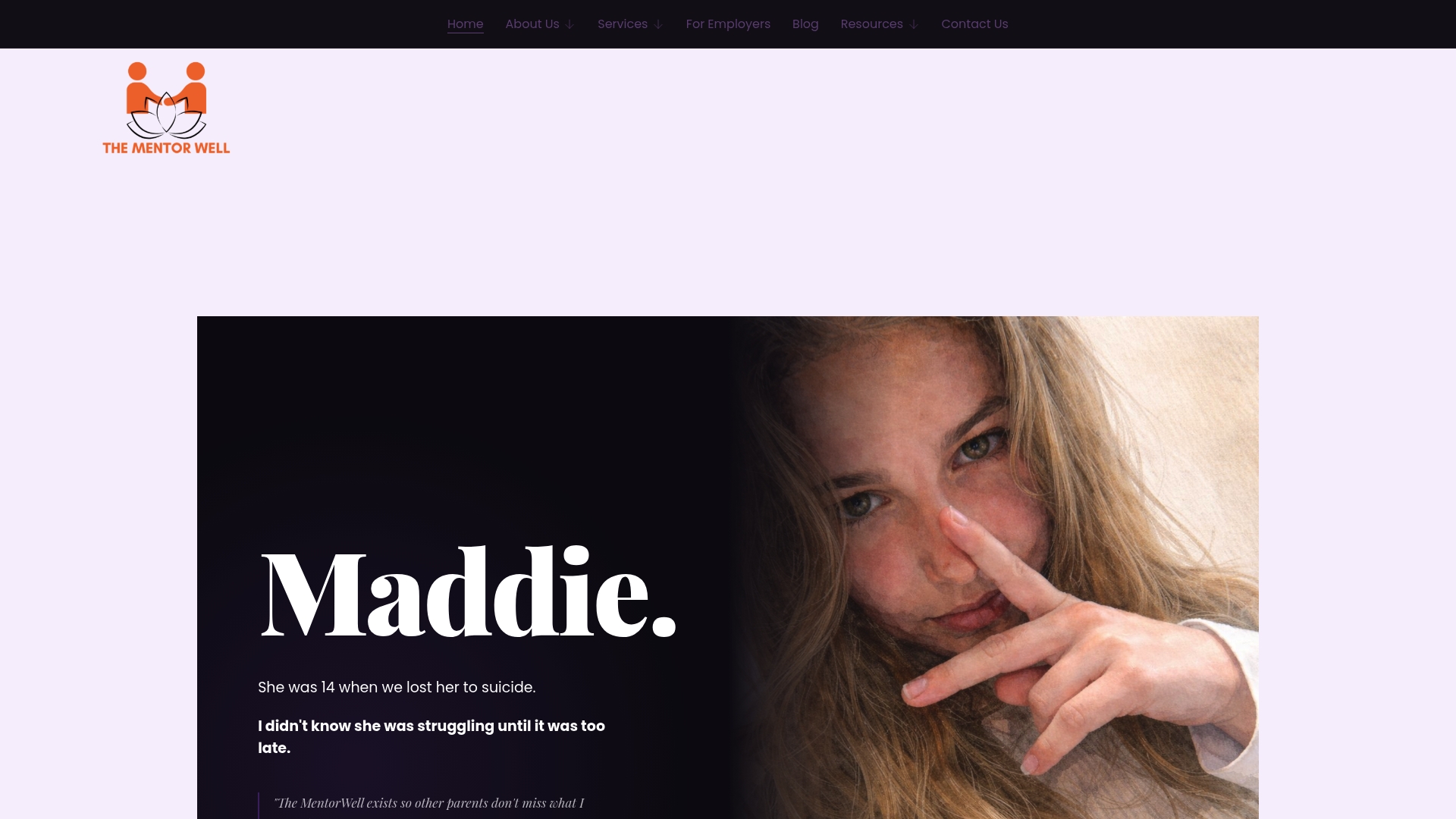
Chris built The MentorWell because he knows what it costs to miss the signs. The workshops, the Teen Signal Check, and the coaching programmes are designed for workplaces where someone is willing to pay attention. If that is you, the next step is straightforward. Visit The MentorWell to learn how to bring early intervention training into your workplace before you need it.
FAQ
What are the most common mental health challenges young employees face?
Anxiety is the most commonly reported issue among young workers, alongside depression and stress related to precarious employment. A 2017 Ontario study found that 24% of young adults seeking work met criteria for severe mental distress, which is four times higher than the rate in the general population.
How can employers support young employees' emotional wellbeing day to day?
Normalise mental health conversations in regular one-on-ones, communicate EAP options at onboarding, and train supervisors with practical scripts for early engagement. Psychological safety, not financial perks, is what young workers say they value most.
What should HR do when a young employee is in crisis?
Stay present, do not leave the employee alone, and connect them immediately to a trained professional or Canada's 988 Suicide Crisis Helpline. Document the response and follow up with the employee's consent.
Does Canadian law require employers to support mental health at work?
Yes. Federally regulated employers must maintain psychologically safe workplaces under the Canada Occupational Health and Safety Regulations, and the CSA Z1003 standard provides the national framework. Provincial legislation and the Canadian Human Rights Act extend similar duties across most workplaces.
How does The MentorWell help employers support young workers?
The MentorWell offers early detection workshops, manager coaching, and the Teen Signal Check tool to help employers identify distress in youth aged 8–25 before it becomes a crisis.
Key takeaways
Canadian workplaces that build proactive mental health programmes, grounded in CSA Z1003 and led by trained managers, give young employees the best chance of getting support before a crisis occurs.
| Point | Details |
|---|---|
| Scale of need | Over 1.25 million Canadian youth aged 15–24 need mental health support annually; only 19% access services. |
| Access barriers | 52% of young workers cite cost and 45% cite wait times as barriers; extending benefits to part-time staff closes the gap. |
| Benefits impact | Employees with group benefits scored 54% on mental health measures versus 42% for those without, per 2026 Ipsos data. |
| Prevention over reaction | Supervisor scripts, peer support, and mental health literacy training reduce crisis frequency more than reactive EAP alone. |
| The MentorWell | Offers workshops, coaching, and the Teen Signal Check to help employers detect early distress in youth aged 8–25. |