
The most effective examples of supportive onboarding for mental health share one quality: they are scheduled, not optional. Here is what to put in place before a new hire's first day.
Top examples to implement now:
- A welcome email that names your Employee Assistance Programme (EAP), lists crisis contacts including Canada's suicide and crisis line, and sets a Day 3 check-in on the calendar
- A printed or digital welcome package with benefits navigation, accommodation request instructions, and links to mental health resources for young employees
- A written onboarding syllabus covering the first months with scheduled mental-health touchpoints, not just training milestones
- A buddy assignment with a short checklist so the buddy stays a social navigator, not an accidental counsellor
- Manager check-in scripts for early and mid onboarding check-ins, including a revisit a few weeks in
- A proactive mention of the Canadian Mental Health Association (CMHA) provincial branches and the Mental Health Commission of Canada as trusted resources
- A one-question pulse survey early in onboarding to measure whether new hires actually saw and understood the supports
The National Standard of Canada for Psychological Health and Safety in the Workplace frames psychological safety as a prevention priority, not a remediation tool. That framing belongs in your onboarding documents from the start. HR owns the Day 1 communication; the hiring manager owns the first 1:1. Both need to happen on the same day, and the welcome email needs to go out before the new hire walks in the door.
Table of Contents
- What does a 0–90 day mental health onboarding syllabus look like?
- Copy-ready templates and scripts for HR and managers
- How do you present EAP and crisis supports without stigma?
- What should managers actually do and say during onboarding?
- How do you reduce isolation for remote and hybrid new hires?
- How do Canadian frameworks shape your accommodation process?
- Key takeaways
- What I know about the cost of waiting
- The MentorWell can help you implement this
- Useful sources
- FAQ
What does a 0–90 day mental health onboarding syllabus look like?
The Mental Health Commission of Canada's Manager Toolkit recommends mapping training, social interactions, and mental-health supports onto a structured timeline so nothing gets left to chance. Below is a ready-made version you can copy directly into your onboarding packet.
Day 1
- Send the welcome email (template in the next section) with EAP access instructions, 988, and CMHA contact
- Manager delivers a 15-minute intro 1:1 and schedules the Day 3 informal check-in
- New hire receives the welcome package with benefits summary, accommodation process overview, and a clear statement of confidentiality
- Buddy is introduced by name and has a coffee chat booked early in the onboarding period
Week 1
- Buddy completes the social introduction checklist covering team basics and norms
- Small-group coffee chat with a few colleagues, pre-scheduled by HR
- Manager briefly introduces psychological-safety expectations: "You can ask questions here. You can say when something isn't working."
- New hire is pointed to the psychological safety resources and the organisation's mental-health policy
2–3 weeks
Workplace Strategies for Mental Health identifies this window as the point where employees feel safe enough to disclose concerns they held back in the first week. Plan a deliberate revisit, not a casual check-in. The manager schedules a 20-minute confidential conversation to cover any missed orientation items and ask directly: "Is there anything you need that we haven't set up yet?"

30/60/90 checkpoints

| Checkpoint | Focus | Owner | Success signal |
|---|---|---|---|
| Day 30 | Role clarity, feedback preferences, benefits review | Manager + HR | New hire can name their EAP and one trusted support contact |
| Day 60 | Accommodation needs, workload fit, social connection | Manager | No unaddressed support gaps; buddy relationship active |
| Day 90 | Pulse survey results reviewed, onboarding formally closed | HR | New hire rates feeling supported on pulse survey |
Copy-ready templates and scripts for HR and managers
These are designed to be pasted directly into your systems. Adjust names and programme details, but keep the framing: supports are standard, confidential, and normal.
Welcome email template
Subject: Welcome to [Organisation] — your first week and the supports available to you
Hi [Name],
We're glad you're here. Your first day is [Date]. [Manager name] will meet you at [time/location].
A few things to know before you arrive:
- Employee Assistance Programme: [EAP name] is available to all employees at no cost. Access it at [link] or call [number]. It's confidential.
- Crisis support: If you or someone you know needs immediate help, call or text 988 (available 24/7 across Canada).
- CMHA: Your provincial Canadian Mental Health Association branch is at cmha.ca/find-your-cmha.
- Accommodations: If you need any adjustments to do your best work, contact [HR contact name] at [email]. All conversations are confidential.
[Manager name] has a 15-minute call booked for Day 3 just to check in. No agenda — just a chance to ask anything.
See you [Day]. [HR name]
Welcome package checklist
- Benefits summary with EAP name, access link, and phone number
- Accommodation request process (one page, plain language)
- 988 and CMHA provincial branch contact
- Organisational mental-health policy (or where to find it on the intranet)
- Buddy's name and contact, with a note on what the buddy is there for
- Manager's name and scheduled Day 3 check-in time
- Link to self-care and wellness resources, including practical self-care tools from NIMH
Buddy checklist and script
Buddies are social navigators. Train them in one thing above all: the difference between listening and counselling. The Mental Health Commission of Canada's hybrid toolkit recommends giving buddies explicit scripts for escalation.
Buddy checklist:
- Introduce yourself and explain your role ("I'm here to help you find your feet, not to evaluate you")
- Walk through team norms, unwritten rules, and where to find things
- Check in at end of Week 1 and end of Week 2
- If a new hire discloses distress, say: "That sounds hard. Have you been able to talk to [HR contact] or the EAP? I can help you find the number."
- Do not offer personal advice or share your own mental-health history
Manager check-in scripts
Day 3 (informal, 10 minutes): "How are you settling in? Anything that felt confusing or that we could have explained better? No pressure to have it all figured out — I just want to make sure you have what you need."
2–3 week revisit (20 minutes, scheduled): "I want to check in properly. Is there anything from orientation we didn't cover that you'd like to go back to? And is there anything about your workload or your setup that isn't working yet? If you need any adjustments, that conversation is completely confidential."
How do you present EAP and crisis supports without stigma?
The answer is simpler than most HR teams think. CMHA's Mental Health Works guidebook is direct on this: push the information to employees rather than waiting for them to ask. When EAP details appear in the offer letter, the Day 1 welcome package, and again at the 2–3 week revisit, access normalises. Employees stop reading it as "this is for people who are struggling" and start reading it as "this is how things work here."
Use this framing in all new-hire materials:
Mapping the supports clearly:
- 988: — Immediate crisis support, available 24/7 across Canada, call or text
Measurement prompt: At Day 14, send one question: "Do you know how to access mental-health support through your benefits? Yes / No / I'd like more information." The response rate and the "No" count tell you whether your communication is landing.
Pro Tip: Place 988 and the EAP number on a physical card in the welcome package, not just in a PDF. Cards get kept. PDFs get closed.
What should managers actually do and say during onboarding?
The Mental Health Commission of Canada puts it plainly: check in, not check up. The distinction matters. Checking up is surveillance. Checking in is human.
Recommended cadence:
- Day 1: Brief welcome, confirm the new hire has the welcome package, set Day 3 check-in
- Day 3: Informal conversation (script above)
- End of Week 1: Quick message or drop-by: "How was the first week?"
- 2–3 weeks: Scheduled 20-minute revisit (script above)
- Monthly thereafter: Standing 1:1 that includes one open question about workload and wellbeing
Early warning signs to watch for:
- Withdrawal from team interactions after an initially engaged start
- Missed deadlines without explanation
- Visible fatigue or flat affect across multiple days
- Requests to work alone or avoid team activities
When you notice these, the next step is not a formal meeting. It's a quiet, private conversation: "I've noticed you seem a bit quieter this week. I just want to check in. How are you doing?" If the employee discloses distress, your role is to listen, not solve. Refer to HR or the EAP, and document the referral privately.
What not to say:
- "Everyone feels that way at first." (Dismisses the experience.)
- "You just need to push through." (Closes the door.)
- "I'm sure it'll get better." (Offers false reassurance.)
For managers who want to build real mental-health literacy, a one-hour microtraining session covers the basics: how to start a wellbeing conversation, what to do after a disclosure, and when to escalate. The HRPA practice guidelines recommend mandatory mental-health training for leaders as a baseline. The MentorWell's manager coaching sessions are built around exactly this gap. More on how managers can support young employees is available on the blog.
How do you reduce isolation for remote and hybrid new hires?
Isolation is the quiet risk in hybrid onboarding. A new hire who spends their first two weeks on video calls with no informal contact is already at a disadvantage before the work even starts.
Practical activities to deploy immediately:
- Pre-set coffee chats: HR books two or three 20-minute video calls between the new hire and individual team members in the first week. The new hire does not have to ask. The calendar invite is already there.
- Virtual scavenger hunt: A short, structured activity on Day 1 or 2 that gets new hires exploring the intranet, finding key contacts, and completing a simple task. The Mental Health Commission of Canada's onboarding toolkit specifically recommends this for hybrid teams.
- Interest-based small groups: Ask new hires in the welcome survey what they enjoy outside work. Use the answers to connect them with existing employee groups (running club, book club, parents' network). This is especially useful for working parents who may need flexible social options.
- Asynchronous welcome thread: A Slack or Teams channel where team members post a short welcome message and one fun fact. The new hire can read and respond on their own time.
- Staggered meet-and-greets: Spread introductions across the first month rather than front-loading them. One or two new connections per week is more sustainable than five in the first three days.
Pace matters. An introverted new hire who receives six social invitations in Week 1 will feel overwhelmed, not welcomed. Space the interactions deliberately, and let the buddy be the guide on what feels like too much.
For teams building a more structured peer support model, the peer support network guide offers a step-by-step framework.
How do Canadian frameworks shape your accommodation process?
The National Standard of Canada for Psychological Health and Safety in the Workplace identifies prevention, promotion, and resolution as the three pillars of psychological safety at work. Onboarding is where prevention starts. The duty to accommodate under the Canadian Human Rights Act requires employers to adjust working conditions for employees with mental-health conditions up to the point of undue hardship. That obligation begins on Day 1, not after a probationary period.
Accommodation process flow:
| Step | Action | Owner | Confidentiality note |
|---|---|---|---|
| 1. Disclosure | Employee contacts HR or manager | Employee | Disclosure is voluntary; no diagnosis required |
| 2. Conversation | HR meets with employee to understand needs | HR | Notes kept in a separate, restricted file |
| 3. Plan | Accommodation plan developed collaboratively | HR + employee + manager | Manager receives only what is needed to implement |
| — | Adjustments put in place | Manager | No disclosure to team required |
| — | Check-in at 30 and 90 days | HR | Plan updated as needs change |
The CMHA Mental Health Works guidebook recommends meeting employees where they are rather than applying a fixed template. Collaborative planning, where the employee leads on what they need, produces better outcomes than a manager-driven "fix it" approach.
Include these three trust signals in every new-hire communication:
- A clear non-retaliation statement: "Requesting an accommodation will not affect your employment or performance review."
- A confidentiality statement: "Information about your accommodation is kept in a restricted file, separate from your personnel record."
- A named contact: "If you have questions, contact [HR name] at [email]."
Pro Tip: Add a one-paragraph accommodation overview to the offer letter itself, before the new hire's first day. Employees who see it early are more likely to ask for what they need before a small issue becomes a crisis.
For guidance on building a full mental-health policy that supports your accommodation process, the workplace mental health policy guide is a practical starting point.
This article provides general guidance on Canadian workplace mental-health practices. It is not legal advice. Confirm your obligations under the Canadian Human Rights Act and applicable provincial legislation with a qualified employment lawyer or HR professional.
Key takeaways
Embedding mental-health supports into onboarding from Day 1, using a structured 0–90 day syllabus with scheduled touchpoints, is the most direct way to normalise access and reduce stigma for new hires in Canada.
| Point | Details |
|---|---|
| Push, don't wait | Include EAP, 988, and CMHA contacts in the offer letter and Day 1 welcome package — don't wait for employees to ask. |
| Schedule the 2–3 week revisit | This window is when employees feel safe enough to disclose; plan it as a formal step with a manager script. |
| Train buddies in boundaries | Give buddies an escalation script so they stay social navigators, not accidental counsellors. |
| Use the National Standard | Align your accommodation process and onboarding documents with the National Standard of Canada for Psychological Health and Safety in the Workplace. |
| Measure with a pulse survey | A single wellbeing question at Day 14 tells you whether your communication is landing before the 30-day checkpoint. |
| The MentorWell | Offers manager coaching, workshops, and onboarding implementation support to help HR teams put these practices into place. |
What I know about the cost of waiting
There is a moment, early in someone's first weeks at a new job, when they are deciding whether this place is safe. Not physically safe. Safe enough to say, "I'm not okay." Safe enough to ask for what they need before things get worse.
Most organisations miss that window. Not because they don't care. Because no one scheduled it.
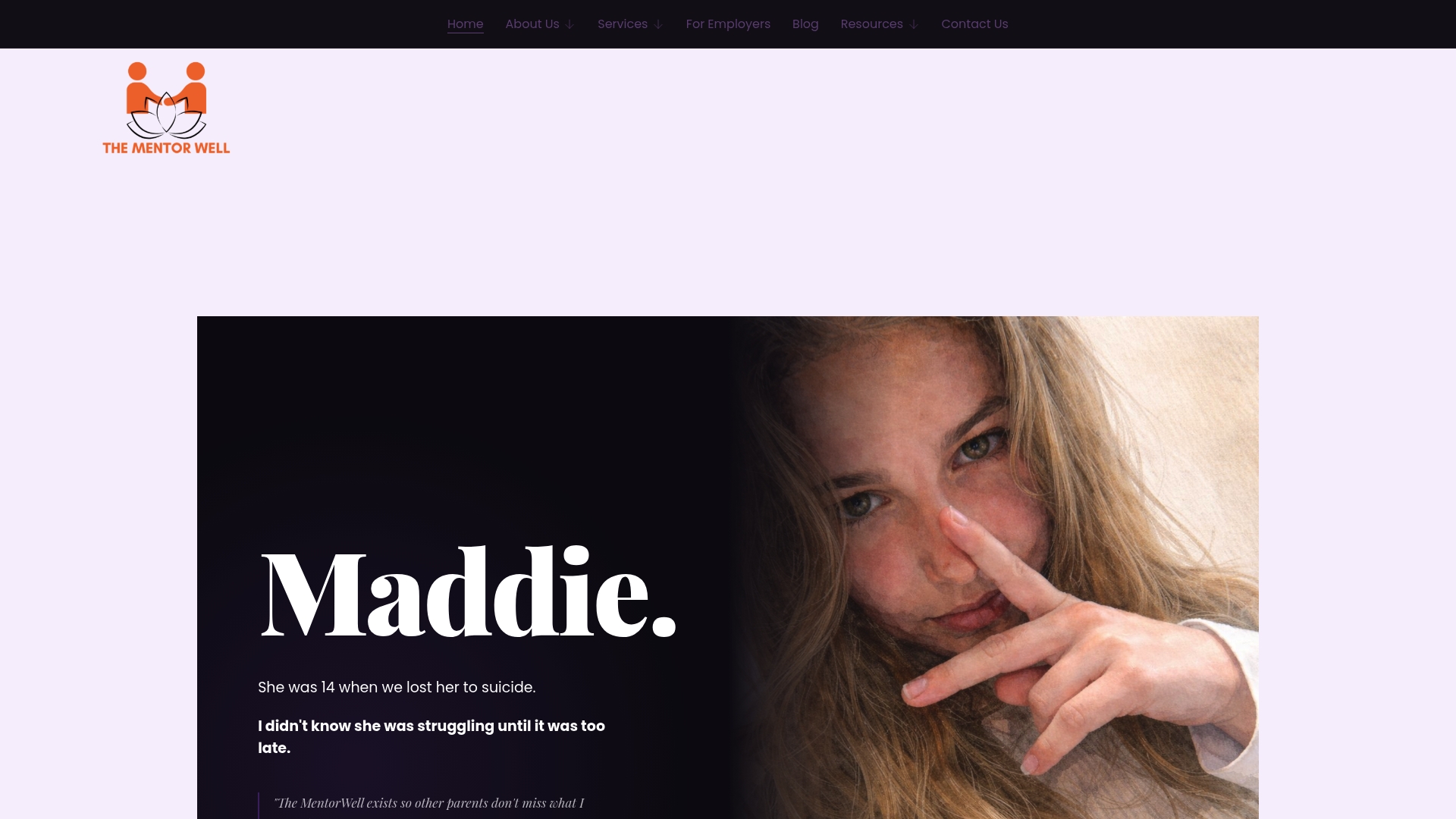
I built The MentorWell after losing my daughter Maddie. What I carry from that is not a lecture about mental health. It's a very specific understanding of what it looks like when someone is struggling and the people around them don't have the language, the structure, or the permission to say something. The silence isn't cruelty. It's just the absence of a plan.
That is what these templates are. A plan. Something to hand a manager who wants to do the right thing but doesn't know what to say on Day 3. Something to put in a welcome package so a new hire knows, before they ever need it, that the door is open.
The practical tools in this article, the scripts, the syllabus, the accommodation process, connect directly to the workshops and coaching The MentorWell offers for organisations that want to go further than a checklist.
The MentorWell can help you implement this
Most HR teams know what good onboarding looks like. The gap is in the doing: who writes the scripts, who trains the managers, who reviews the welcome package before it goes out.
The MentorWell offers manager coaching sessions, live and on-demand workshops for HR teams, and onboarding implementation support built around early detection and psychological safety. A typical workshop engagement provides managers with scripts, a check-in cadence, and a clear referral process. Coaching engagements go deeper, working through your specific onboarding documents and accommodation process with a practitioner who has done this work in real organisations.
If you want to start smaller, The MentorWell's digital tools and templated onboarding materials give you a ready-made foundation to adapt. The Teen Signal Check, designed for early detection of emotional distress in youth aged 8 to 25, reflects the same early-intervention philosophy that makes structured onboarding so effective for young employees.
Book a scoping call or request templated onboarding materials at thementorwell.com.
Useful sources
These are the Canadian standards, toolkits, and practical downloads to consult alongside this article.
| Resource | Type | Best used for |
|---|---|---|
| Mental Health Commission of Canada — Manager Toolkit: Onboarding Strategies | Template + guidance | Welcome package design, virtual activities, buddy system |
| Workplace Strategies for Mental Health — Psychologically Safe Orientation | Guidance | 2–3 week revisit planning, psychological safety framing |
| CMHA Mental Health Works Guidebook | Guidebook | Accommodation conversations, push-communication strategy |
| HRPA Practice Guideline — Fostering Mental Health in the Workplace | Legal/standard reference | Manager training requirements, data-driven evaluation |
| WSPS — Mental Harm Prevention Roadmap (National Standard) | Standard reference | Aligning onboarding documents with the National Standard |
| Mental Health Commission of Canada — Hybrid Managers Toolkit | Template | Buddy system, hybrid social activities |
| 988 (call or text) | Immediate help | Crisis support reference in all new-hire materials |
| CMHA — Find your local branch | Community resource | Provincial peer support and community programmes |
| Maternal mental health support — Mum Bub Hub | Partner resource | Tailoring onboarding supports for employees who are new parents or caregivers |
FAQ
What are the four C's of onboarding, and how do they apply to mental health?
The four C's are compliance, clarification, culture, and connection. Mental-health supports belong in all four: compliance covers legal accommodation obligations, clarification covers EAP and benefits navigation, culture covers psychological-safety expectations, and connection covers the buddy system and peer introductions.
What are practical examples of mental health support during onboarding?
The most direct examples are a welcome email that names the EAP and 988, a buddy assignment with a written checklist, a scheduled 2–3 week manager revisit, and a one-question pulse survey at Day 14 to confirm new hires know how to access support.
What are supportive strategies for mental health in the workplace?
Workplace Strategies for Mental Health and the CMHA both point to the same core strategies: push information proactively rather than waiting for employees to ask, schedule regular check-ins, train managers in caring conversations, and make accommodation processes visible and stigma-free from Day 1.
How does onboarding affect young employee wellbeing?
New hires, particularly younger employees, are deciding in the first few weeks whether the organisation is a safe place to be honest about their needs. A structured onboarding syllabus with scheduled mental-health touchpoints signals that support is normal, which lowers the barrier to disclosure before a small issue becomes a crisis.
What is the National Standard of Canada for Psychological Health and Safety in the Workplace?
It is a voluntary standard that sets out a framework for preventing psychological harm and promoting mental health at work, built around prevention, promotion, and resolution. Aligning your onboarding documents and accommodation process with its principles is the most credible way to demonstrate a genuine commitment to psychological safety.