Stay calm, lower your voice, and lead your teen through slow counted breathing until the wave peaks and starts to fall. Panic attacks feel like dying but they are rarely dangerous. Ride out the physical storm first. Recovery and pattern tracking come after.
TL;DR:
- Panic attacks in teens are often triggered by baseline anxiety, with practical management focusing on calming the nervous system through slow, deliberate breathing.
- Grounding techniques such as sensory exercises or naming objects can effectively interrupt panic cycles, especially if the teen is dissociating or overwhelmed.
- After an attack, teens may feel exhausted or embarrassed and benefit from gentle processing, logging patterns, and delaying deeper conversations for later.
- Consistent daily habits like regular sleep, reduced caffeine, and physical activity help lower the frequency of attacks over time.
- Signs of worsening or concerning symptoms include frequent attacks, avoidance behaviors, or physical signs like chest pain or weakness requiring immediate medical attention.
Table of Contents
- How to help your teen in the moment: an ordered checklist
- After the attack: recovery, questions, and what to log
- Prevention and the toolbox your teen builds with you
- When to seek professional or emergency help
- Why this advice matters: tools and resources that back it up
- Signs your teen is having panic attacks but isn't telling you
- A quiet, lived perspective
- How The MentorWell can help you build this toolbox
- Sources
- FAQ
How to help your teen in the moment: an ordered checklist
Your calm is the first tool you have, and it works before you say a single word. Sit close, drop your voice, and slow your own breathing down. Teens borrow a nervous system that isn't screaming when their own is. Say something simple: "I'm here. This will pass. You're safe." Not "calm down." Not "there's nothing to be scared of." Those land as dismissal, and dismissal is fuel.
Once you're both seated somewhere stable, coach the breathing.
- Breathe in through the nose for a count of four.
- Hold for one or two seconds.
- Breathe out through the mouth for a count of six.
- Repeat for two to three minutes, counting out loud together if it helps.
The longer exhale matters more than the inhale. It tells the nervous system the danger has passed, according to guidance from ADAA on helping a teen through a panic attack. Pace it slower than feels natural. Panic wants to rush; your job is to be the metronome.
Grounding works alongside breathing, especially if your teen is dissociating or can't focus on counting. Try:
- Five things they can see, four they can touch, three they can hear, two they can smell, one they can taste.
- Naming a familiar object out loud, describing its colour, weight, and texture.
- Pressing feet flat on the floor or holding something cold, like an ice cube or a water bottle.
Hospitals and youth mental health resources describe these brief counting and sensory rules, sometimes called the 3-3-3 method, as a reliable way to interrupt the panic cycle and pull focus back into the room, according to University of New South Wales researchers.
Handle the physical space too. Get your teen sitting, not standing. Loosen a tight collar or waistband. Clear anything sharp or unstable nearby if they're disoriented. None of this needs to look dramatic. It just needs to happen.
What not to do matters as much as what to do. Don't say "it's not a big deal" or "you're fine" — that reads as denial of something that feels like the end of the world. Don't force deep breathing if they're fighting you on it; offer it, don't command it. And don't argue about whether the trigger was "worth" this reaction. That conversation happens later, if at all.
Pro Tip: Keep a laminated card in your wallet or car with the breathing count and grounding list written out. In the moment, you won't remember steps. Read them.
After the attack: recovery, questions, and what to log
The attack ends before the body catches up. Your teen may feel shaky, exhausted, or embarrassed for the next twenty to thirty minutes, sometimes longer. Offer water. Sit somewhere quiet. A short walk can help some teens release leftover adrenaline, but don't push movement if they'd rather stay still. Let the pace be theirs.
Resist the urge to interrogate. One or two questions, asked gently, are enough: "Do you know what was happening right before this started?" or "Has this happened before?" If the answer is a shrug, let it be a shrug. Pressing for detail while the nervous system is still settling usually backfires.
This is also when a simple log earns its keep. Health resources recommend recording the basics right after an episode, while it's fresh, because patterns matter more than any single attack, according to CHOC's guidance for parents. Track:
- Time and date
- What was happening right before (or afterward, if it came out of nowhere)
- Physical symptoms noticed
- How long it lasted
- Where it happened
Some teens are ready to go back to homework or a friend's house within the hour. Others need the rest of the day to feel normal. Watch your teen, not the clock. If they slept badly the night before or this is the third attack this week, slow the day down regardless of how they insist they're fine.
Save the deeper conversation for later, ideally hours later, not minutes. In that calmer talk, validate without minimizing: "That looked scary. I'm glad you told me," goes further than any explanation of what anxiety is. The goal isn't to solve it that night. It's to make the next attack a little less isolating than this one was.
Prevention and the toolbox your teen builds with you
Panic attacks aren't random weather. Baseline anxiety sets the stage, and daily habits shift that baseline more than most families expect. Sleep consistency, reduced caffeine, and regular movement are the unglamorous levers that public health resources consistently point back to for lowering attack frequency, according to EmergencyCareBC's guidance on anxiety and panic.
Build the toolbox on a calm day, never a crisis day. Practise these together:
- Paced breathing, until the four-count-in, six-count-out rhythm feels automatic.
- Grounding drills, run casually during a car ride or while making dinner.
- Progressive muscle relaxation, tensing and releasing muscle groups from feet to face.
- Coping cards, three or four index cards with a script or reminder your teen picks in the moment.
A physical self-soothe box helps too. Something small: a scent they like, a photo, a short audio recording of your voice walking through the breathing steps. Teens often won't ask for this out loud, but they'll use it if it's there.
If school is a trigger site or a frequent location for attacks, have one conversation with a school counsellor or trusted teacher. It doesn't need to be a formal accommodation meeting. Sometimes it's just: "If this happens, here's what helps and here's who to call."
Pro Tip: Role-play the toolbox before your teen needs it. Have them "teach" you the breathing count or walk you through their grounding list. Teaching it back is how it becomes theirs, not just yours.
When to seek professional or emergency help
Most panic attacks are frightening, not dangerous. But some signs mean you stop coaching and start calling for help immediately:
- Chest pain that doesn't ease as breathing slows
- Fainting or loss of consciousness
- Any mention of wanting to die or hurt themselves
- New confusion, slurred speech, or weakness on one side of the body
Those warrant emergency care, full stop, because they could signal something other than panic.
Short of an emergency, watch for pattern: attacks happening more than once a month, interfering with school or friendships, or your teen starting to avoid places where one happened before. That's when you move from home management to a professional conversation, whether that's a pediatrician, a family doctor, or a therapist.
Cognitive behavioural therapy is the treatment most consistently recommended for panic in teens, and medication can support that work in some cases, according to the American Academy of Child and Adolescent Psychiatry. The Child Mind Institute frames the strongest results as a combination: skills practice at home, family involvement, and professional therapy working together, not any single piece alone.
Before an appointment, bring your log. Write down the questions you actually have. Ask what treatment options look like locally, including telehealth if a specialist isn't nearby, and ask your teen's school if a counsellor is available in the meantime.
Why this advice matters: tools and resources that back it up
I built The MentorWell because I know what it costs to miss the signs. Chris Coulter founded it in memory of his daughter Maddie, and every workshop, every coaching session, exists to close the gap between "something seems off" and "we did something about it."
- The Teen Signal Check helps parents of kids aged 8 to 25 spot subtle warning signs before a crisis, not after.
- It fits directly into the toolbox: use it alongside breathing scripts and grounding drills, not instead of them.
- Read more on teen mental health warning signs and how to navigate a mental health crisis together.
Signs your teen is having panic attacks but isn't telling you
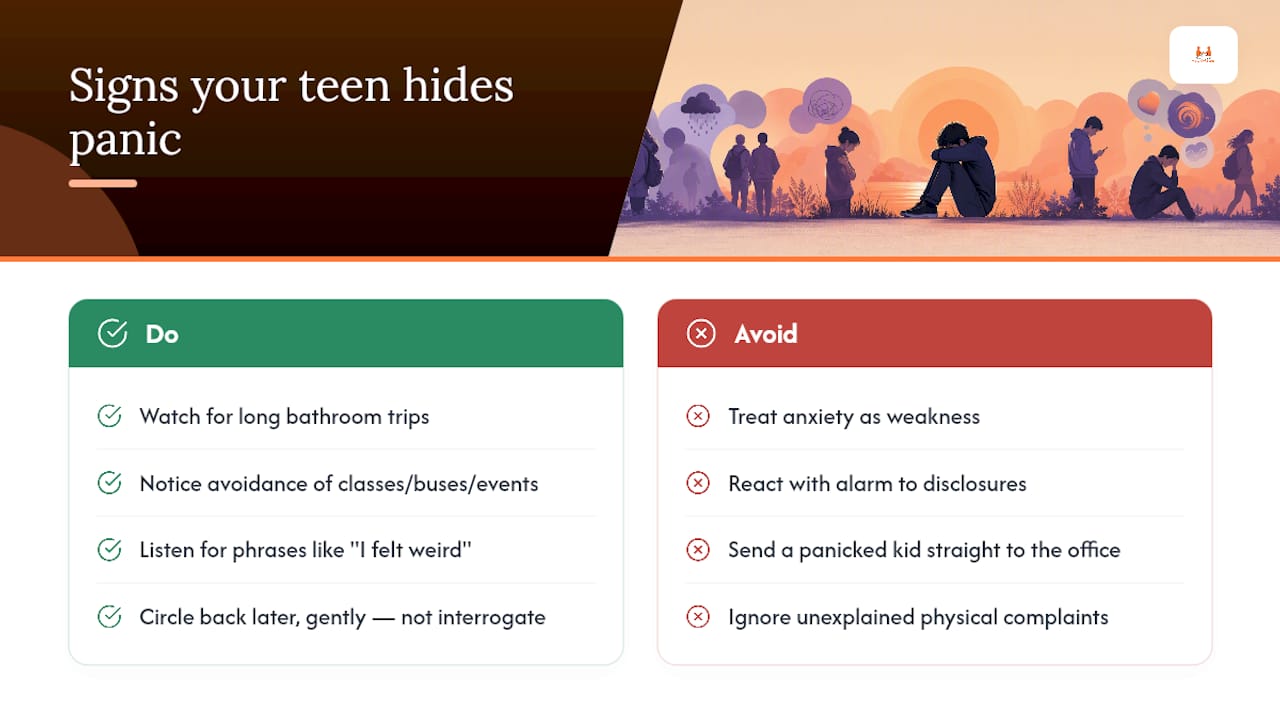
Some teens hide it. Not out of dishonesty, out of shame, or fear of being a burden, or simple confusion about what's happening to their own body.
Watch for sudden bathroom trips that last longer than they should. Watch for a teen who starts avoiding specific classes, buses, or social events without a clear reason, or who develops a new habit of sitting near exits. Physical complaints with no obvious cause, headaches, stomach aches, a racing heart they mention once and then downplay, can be the residue of an attack they never named out loud.
Listen for the language too. "I just felt weird" or "I thought I was going to throw up" or "my heart was doing something strange" are often panic symptoms described by a kid who doesn't have the word "panic attack" yet, or is scared to use it. According to Statistics Canada's overview of anxiety disorders, panic attacks typically peak within about ten minutes and involve physical symptoms severe enough to be mistaken for a medical emergency. If your teen described something like that once and changed the subject fast, don't let it go. Circle back later, gently, without making it an interrogation.
School and family environment shape whether a teen speaks up at all. A house where anxiety is treated as weakness teaches silence. A classroom where a panicked kid gets sent to the office instead of supported teaches the same lesson. If you want your teen to tell you, the response to the first disclosure has to be calm, not alarmed. React big once, and you may not hear about the second one.
A quiet, lived perspective
I've sat in the car outside a school, engine off, waiting for my daughter to be ready to talk. I didn't fill the silence. I didn't fix it. I just stayed.
Don't minimize. Don't panic yourself. Don't wait for the crisis to learn the tools.
Learn them now, with your teen, before you need them.
— Chris Coulter
How The MentorWell can help you build this toolbox
Everything in this article works better with practice and a second set of eyes on the patterns you might miss. The MentorWell runs live and on-demand coaching for parents navigating exactly this: teens who won't open up, panic that seems to come from nowhere, and the gap between reading advice and actually using it under pressure.

The Teen Signal Check gives you a free starting point, a structured way to spot subtle warning signs in a teen aged 8 to 25 before things escalate. From there, parent coaching and family programs walk you through the same breathing, grounding, and conversation scripts covered here, but with someone to ask when your teen's situation doesn't fit the general advice. If mentoring alongside therapy is something you're weighing, our breakdown of mentoring versus therapy explains how the two work together rather than compete.
Start with the Teen Signal Check and book a coaching session when you're ready for more than a checklist.
Sources
- Panic disorder in children and adolescents (AACAP)
- Helping your anxious teen cope with a panic attack (ADAA blog)
- No need to panic! How to help your child during a panic attack (CHOC)
This article is general information, not a substitute for advice from a qualified doctor. Consult a qualified healthcare professional about your own circumstances before acting on anything here.
FAQ
Why is my 14-year-old having panic attacks?
Puberty, academic pressure, social stress, and a family history of anxiety can all raise the odds. Often there's no single trigger. It's baseline anxiety plus one hard day.
What is the 3-3-3 rule for panic attacks?
It's a grounding technique: name three things you see, three sounds you hear, and move three parts of your body. It's used to pull focus back to the present moment during an attack, similar to the 5-4-3-2-1 method described by UNSW researchers.
How do you get a teen out of a panic attack?
Lead them through slow paced breathing, four counts in and six counts out, while staying physically close and calm. Grounding exercises alongside breathing typically bring the peak down within minutes.
What are common panic attack symptoms in teenage girls?
Racing heart, shortness of breath, dizziness, chest tightness, and numbness or tingling are common physical symptoms, alongside an intense wave of fear that peaks within about ten minutes, per Statistics Canada.
How is a panic attack different from panic disorder?
A single panic attack is one episode. Panic disorder means recurrent, unexpected attacks along with ongoing worry about having another one, which is when professional treatment like CBT becomes the recommended next step.