
TL;DR:
- Preventative mental wellness involves building emotional resilience and coping skills before crises develop. It emphasizes early identification, self-care, and supportive environments to reduce treatment gaps among youth.
Preventative mental wellness is the practice of building emotional strength and coping skills before a crisis arrives. The industry term for this work is primary prevention, and it sits at the foundation of frameworks used by the Canadian Mental Health Association and School Mental Health Ontario. 41% of Canadian youth do not receive the mental health treatments they need. That number means most families are already behind by the time they seek help. The goal of preventative mental wellness is to close that gap early, through self-care habits, early identification, and supportive environments that reduce the risk of escalation.
What is preventative mental wellness, and why does it matter now?
Preventative mental wellness is defined as the proactive cultivation of emotional and psychological health before symptoms or crises develop. It is not the absence of struggle. It is the presence of skills, connections, and awareness that make struggle survivable.
The Canadian Mental Health Association frames mental health as a continuum. Mental health requires proactive attention at every point on that continuum, not just at the clinical end. School Mental Health Ontario's Tier 2 framework places early identification and targeted support ahead of acute intervention. That ordering matters. Waiting for a crisis to act is like waiting for a fire to spread before calling for help.
For parents of teens, the importance of mental wellness is not abstract. Most mental health conditions have their onset before age 25. The window for early action is real, and it closes.
What are the core strategies of preventative mental wellness?
Preventative mental wellness rests on a few concrete pillars. Each one is practical. None of them require a clinical background to begin.
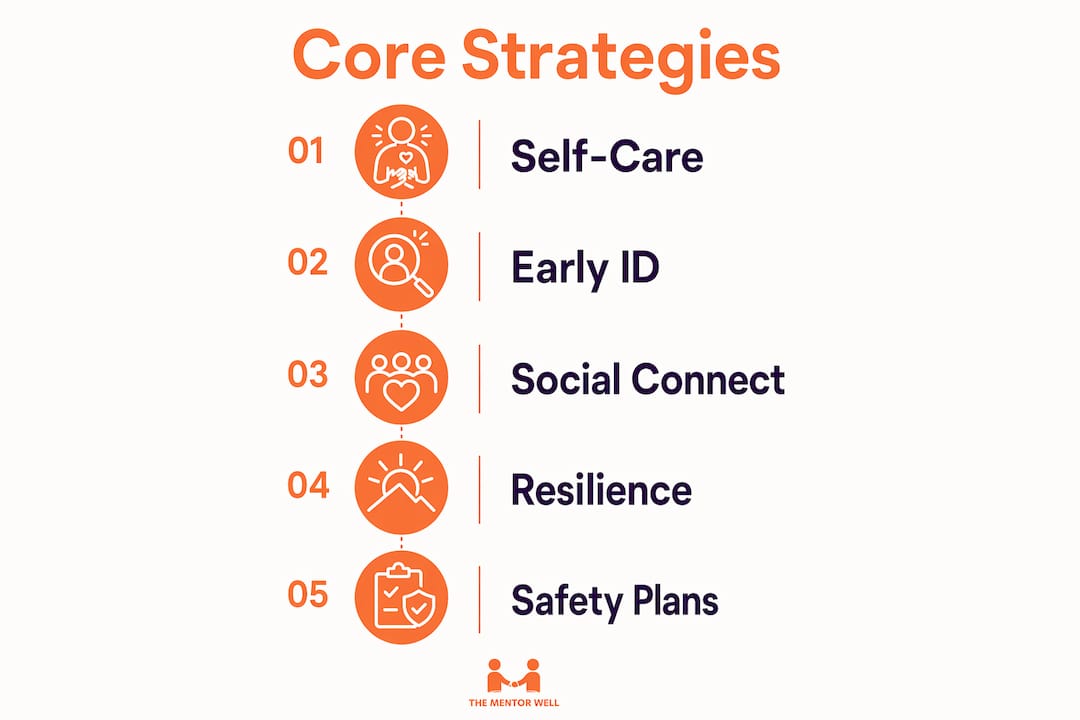
Building a self-care toolbox
Self-care for youth is not rest or reward. Self-care is a proactive set of activities that regulate emotions and manage stress before they compound. A well-built self-care toolbox includes specific, reliable practices a young person can reach for when early signs of distress appear.
Effective tools include:
- Journaling to externalise thoughts and track emotional patterns
- Breathing techniques such as box breathing or 4-7-8 breathing for acute stress
- Physical activity, which links directly to improved mood and reduced anxiety
- Creative outlets like drawing, music, or writing that process emotion without words
- Mindfulness practices, even five minutes of focused attention, to interrupt rumination
The toolbox works because it is personalised. A strategy that calms one teenager may not reach another. Building a personalised self-care toolbox requires trial, conversation, and patience from the adults in a young person's life.
Pro Tip: Ask your teen to name three things that reliably make them feel better. Write them down together. That list is the beginning of their toolbox.
Early identification and Tier 2 support
School Mental Health Ontario's Tier 2 model targets youth who show early signs of difficulty before those signs become clinical symptoms. This level of support includes check-ins, targeted skill groups, and referrals to community resources. The goal is detection and response before the window closes.

Parents play a direct role here. Knowing what a mental health crisis looks like in youth before one happens is itself a preventative act. Awareness is not alarm. It is preparation.
Resilience and social connection
Social connectivity and physical activity link to improved wellbeing, particularly in the post-pandemic period when isolation became a shared experience for an entire generation. Resilience is not a personality trait. It is built through relationships, routine, and the repeated experience of getting through hard things with support nearby.
How does preventative care differ from reactive mental health treatment?
The difference is timing and intent. Reactive care responds to symptoms that have already developed. Preventative care builds capacity before symptoms appear.
Stepped care models, used across Canadian child and youth mental health systems, organise support from low-intensity preventative strategies up through clinical intervention. The model is designed so that most people receive support at the lowest intensity level that meets their need. Preventative mental wellness lives at the base of that model.
Safety plans are most effective when co-developed before a crisis, not during one. A safety plan built in a calm moment focuses on a young person's strengths, their reasons for living, and the coping strategies they already trust. That is a preventative tool. A safety plan written in an emergency room is reactive. Both matter, but only one of them keeps more doors open.
Pro Tip: Sit down with your teen on a quiet evening and ask what helps them feel safe when things get hard. That conversation is the foundation of a safety plan, and it does not need a clinician to begin.
The benefits of mental health prevention are measurable. Early-access programmes show referral rates increase by 10% every six months when early identification is prioritised. That growth reflects real young people reaching support before they reach a breaking point.
What are the challenges in implementing preventative mental wellness for youth?
Prevention is not simple to deliver at scale. Several barriers stand between good intentions and real access.
- Treatment gaps: 41% of Canadian youth lack adequate mental health treatment. Prevention programmes cannot reach young people who are already outside the system.
- Rural and marginalised communities: Geography and systemic inequity limit access to both in-person and digital preventative resources. A programme that works in a well-resourced urban school may not translate to a remote community without reliable internet.
- Digital equity: Equitable access to online programmes requires more than internet availability. Privacy concerns, device access, and digital literacy all shape whether a young person can meaningfully engage.
- Cultural relevance: Programmes designed without input from the communities they serve often miss the mark. Youth from diverse backgrounds need to see their experiences reflected in the content.
- Misconceptions about safety planning: Many parents believe safety plans are only for young people already in crisis. That misunderstanding delays one of the most effective preventative conversations a family can have.
Co-designing programmes with youth directly addresses several of these barriers. Youth involvement in programme design improves cultural relevance, increases engagement, and produces content that young people aged 12–25 actually trust and use.
How can parents practically support preventative mental wellness?
The most direct thing a parent can do is model what they want their teen to learn. Youth observe and learn self-care habits by watching the adults around them. If you never take a break, never name your own stress, and never ask for help, your teenager is learning that too.
Here is a practical starting point:
- Name your own emotions out loud. Say "I'm feeling overwhelmed today, so I'm going for a walk." That sentence teaches more than any lecture.
- Schedule regular check-ins. Not interrogations. A car ride, a meal, a ten-minute walk. Consistent, low-pressure contact keeps the door open.
- Build the toolbox together. Ask your teen what helps. Add to the list over time. Revisit it when things are calm, not only when things are hard.
- Learn the early signs. Review a family mental health checklist before you need it. Knowing what to look for is not catastrophising. It is paying attention.
- Co-develop a safety plan early. Sit with your teen and build one together. Include their coping strategies, their trusted people, and their reasons for living. Keep it somewhere accessible.
Pro Tip: The Canadian Mental Health Association's "By Their Side" guide walks adults through safety planning with youth in plain language. It is free and worth reading before you think you need it.
Families who want structured support can also explore youth wellness resources for parents that translate these principles into week-by-week practice.
What does the evidence say about preventative mental wellness outcomes?
The research is clear. Early intervention works, and it works more effectively the sooner it begins.
The ACCESS Open Minds programme, a Canadian early intervention model, demonstrated that early-access focus increases referrals by 10% every six months. That trajectory means more young people reach support before their symptoms become entrenched.
Co-designed preventative programmes show particular promise. Research on the Preventative Online Mental Health Program for Youth (POMHPY) found that building programmes with young people, rather than for them, produces content that is more culturally relevant and more likely to be used. The co-design approach also surfaces access barriers early in development, allowing teams to build alternate pathways before launch.
"Resiliency and social connections are critical for youth mental health and community recovery. Social connectivity and physical activity link to improved wellbeing, particularly in the post-pandemic period when isolation reshaped an entire generation's relationship with support."
The data on treatment gaps underscores the stakes. When 41% of Canadian youth are not receiving adequate care, prevention is not a supplement to the mental health system. It is a necessary foundation.
Key takeaways
Preventative mental wellness is the most effective way to reduce mental health crises in youth, because it builds capacity before symptoms take hold.
| Point | Details |
|---|---|
| Prevention starts before symptoms | Preventative mental wellness builds skills and awareness before a crisis develops, not during one. |
| Self-care is a specific toolbox | Effective self-care includes named, practised activities like journaling, breathing, and physical movement. |
| Safety plans are preventative tools | Co-develop a safety plan with your teen during a calm moment, not in an emergency. |
| Co-design improves programme reach | Youth-led programme design increases cultural relevance and engagement for ages 12–25. |
| Parents model what teens learn | Adults who name their emotions and practise self-care teach those habits directly to their children. |
What I have learned about paying attention early
I did not know what I was missing until it was too late. That is the sentence I carry everywhere.
I have spent years since Maddie's death talking to parents who say the same thing. They saw something. They noticed a quietness, a withdrawal, a change in how their kid moved through the house. And they told themselves it was a phase. They waited. Most of them are still waiting for the version of their child they thought they would get back.
Prevention is not about fear. I want to be clear about that. It is not about watching your teenager with alarm or turning every bad day into a crisis. It is about paying attention before the window closes. It is about building the kind of relationship where your kid knows they can say something hard and you will not fall apart.
The hardest part for parents is the modelling. We are not great at it. We push through. We do not name what we are feeling. We treat rest as weakness and asking for help as failure. And then we wonder why our teenagers do the same.
I think about the dock a lot. Early morning, coffee in hand, watching the water. That is where I do my thinking now. That is my toolbox. My teenager never saw me do that. She never heard me say "I need to step away for a bit." I did not know that mattered. I know now.
The family support strategies that actually work are not complicated. They are consistent. They are quiet. They are built one conversation at a time, long before anything goes wrong.
Start before you think you need to.
— Chris Coulter
How The MentorWell supports preventative mental wellness
The MentorWell was built for the moment before the crisis. Not after.
The platform offers workshops, coaching, and digital tools designed for parents and youth who want to act early. The Teen Signal Check helps parents and caregivers identify subtle warning signs in young people aged 8–25, before those signs become emergencies. The programmes are built around co-designed, youth-informed content that reflects the real experiences of Canadian families. If you are ready to move from awareness to action, explore The MentorWell's resources and find the tools that fit where your family is right now.
FAQ
What is preventative mental wellness?
Preventative mental wellness is the practice of building emotional skills, resilience, and support systems before mental health issues develop. It focuses on early identification, self-care, and proactive intervention rather than waiting for a crisis.
What does preventative mental health education involve?
Preventative mental health education teaches young people and families to recognise early signs of distress, build coping strategies, and access support before symptoms escalate. School Mental Health Ontario's Tier 2 framework is one example of how this education is structured in Canadian schools.
What are examples of preventative mental health programmes?
Examples include School Mental Health Ontario's Tier 2 early intervention model, the ACCESS Open Minds programme, and co-designed online initiatives like the Preventative Online Mental Health Program for Youth (POMHPY), which was developed with direct input from young people aged 12–25.
How can parents support preventative mental wellness in their teens?
Parents can model self-care openly, hold regular low-pressure check-ins, build a personalised self-care toolbox with their teen, and co-develop a safety plan before a crisis occurs. These actions are most effective when started early and practised consistently.
Why is early intervention more effective than reactive care?
Early intervention reaches young people before symptoms become entrenched, when coping skills are easier to build and support is easier to accept. Research on the ACCESS Open Minds model shows referral rates grow by 10% every six months when early identification is prioritised.