Youth wellness is the active process of nurturing the mental, emotional, physical, and social health of young people so they can flourish. The field draws on frameworks from public health, education, and positive psychology, and is sometimes called adolescent well-being in clinical settings. Both terms describe the same goal: giving young people the conditions they need to grow, not just the absence of illness. More than 1 in 4 high school students reported consistent feelings of sadness or hopelessness over a 12-month period. That number tells us something urgent. Waiting for a crisis to appear before we act is not a plan.
What does youth wellness actually include?
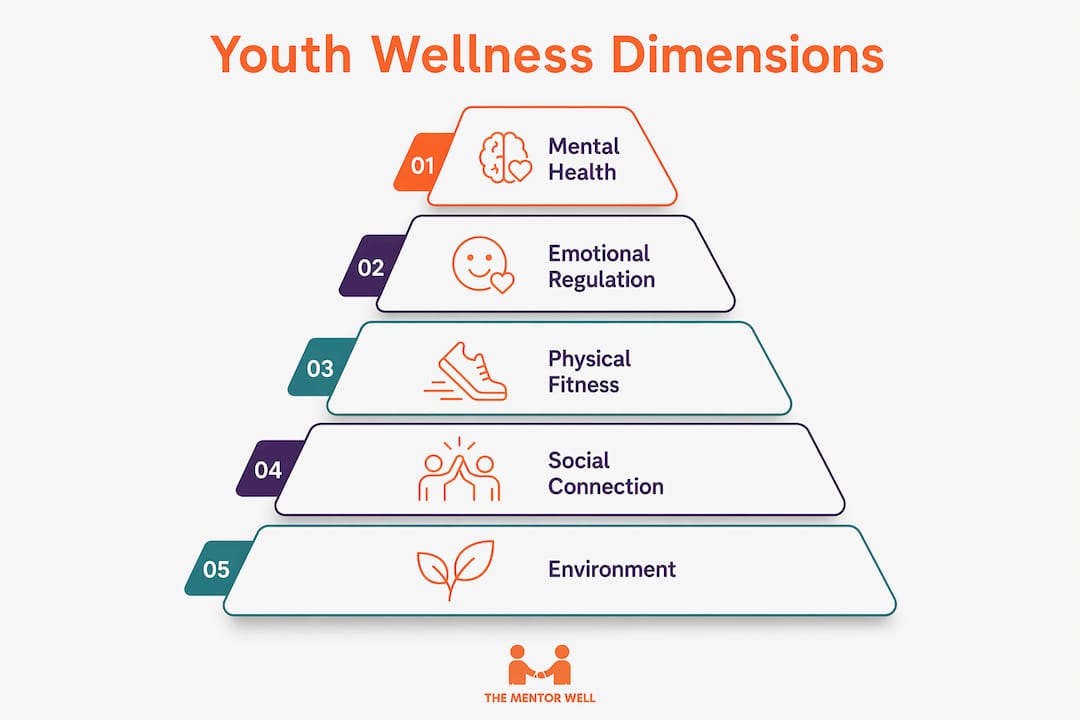
Youth wellness covers five interconnected dimensions: mental health, emotional regulation, physical fitness, social connection, and a supportive environment. Remove any one of them and the others weaken. A teenager who sleeps well and exercises regularly but has no trusted adult to talk to is still at risk. A student with strong friendships but no tools for managing stress will struggle when pressure builds.
Mental health sits at the centre of the framework. Emotional regulation, the ability to name and manage feelings without being overwhelmed by them, is the skill that makes the other dimensions accessible. Specialized youth wellness programmes prioritise outreach for young people aged 8–20 who have experienced a mental health crisis or thoughts of self-harm within the previous 90 days. That window matters. Early contact during that period significantly improves outcomes.
Physical fitness for teens is more than sport. Sleep, nutrition, and movement all affect mood, concentration, and resilience. Social connection, whether through family, school, or community, buffers young people against anxiety and isolation. The environment, meaning safe spaces, green spaces, and access to creative arts, shapes whether a young person feels they belong.

| Dimension | What it looks like in practice |
|---|---|
| Mental health | Access to counselling, reduced stigma, early identification of distress |
| Emotional regulation | Teaching self-awareness, breathing techniques, and coping language |
| Physical fitness | Consistent sleep, balanced nutrition, and regular movement |
| Social connection | Trusted relationships with peers, family, and mentors |
| Supportive environment | Safe spaces, outdoor areas, arts programmes, and inclusive community |
How does positive youth development support wellness in schools and workplaces?
Positive youth development, commonly abbreviated as PYD, is a set of principles rather than a rigid programme. PYD is adaptable to different industries, cultures, and settings. The core idea is that young people thrive when adults invest in their strengths, not just their deficits.
In schools, PYD takes shape through whole-school well-being strategies. Schools that embed a shared language of strengths and emotional regulation across every classroom help students manage stress before it becomes a crisis. This is not a one-off assembly or a single counsellor's caseload. It is a culture built through repetition, leadership alignment, and consistent messaging from every adult in the building.
In workplaces that employ young workers, PYD looks different but draws on the same principles. Employers who train supervisors to provide mentorship and growth-oriented feedback see significantly better outcomes for young employees than those who rely on perks alone. Retention improves. Engagement deepens. Young workers who feel seen and supported perform better and stay longer.
Youth voice drives positive change when their perspectives are integrated into programme design. This applies equally to school wellness committees and workplace wellness programmes for young workers. Ask them what they need. Then actually listen.
Pro Tip: When building a youth wellness culture in a school or workplace, start with language. Agree on three or four shared phrases for emotional states and use them consistently across every adult interaction. Culture is built in the small, repeated moments.
What practical strategies can parents and educators use every day?
The most effective strategies are not complicated. They are consistent. Parents and educators who show up reliably, who ask open questions and sit with uncomfortable answers, do more for a young person's emotional wellness than any single programme.
Shift from surveillance to partnership
Digital habits are one of the most common friction points between parents and teenagers. Shifting from digital surveillance to partnership, through tools like shared charging stations and family media plans, reduces conflict and builds healthier long-term habits. The goal is not to monitor a teenager's screen time. The goal is to stay in relationship with them while they figure out how to manage it themselves.
Learning how to listen to your teen without immediately trying to fix the problem is one of the most powerful things a parent can do. Teenagers stop talking when they feel interrogated. They keep talking when they feel heard.
Teach emotional regulation before it is needed
Emotional self-regulation is a skill. Like any skill, it is best taught when the pressure is low, not in the middle of a meltdown. Parents and educators can introduce simple practices, such as naming emotions, identifying physical sensations, and practising slow breathing, during calm moments. These tools become available when stress arrives.
Build routines that normalise well-being
Routines reduce the cognitive load of wellness. When a family eats dinner together most nights, when a school starts each day with a brief check-in, when a workplace holds a monthly one-on-one between a young worker and their supervisor, well-being becomes ordinary. That ordinariness is protective.
Pro Tip: Use the Teen Signal Check from The MentorWell as a structured starting point. It helps parents and caregivers identify subtle warning signs in young people aged 8–25 before a situation reaches crisis level.
Here is a simple four-step approach for parents and educators:
- Ask open questions daily. "What was the hardest part of your day?" opens more than "How was school?"
- Name emotions out loud yourself. Modelling emotional language teaches it more effectively than instruction.
- Create a predictable check-in ritual. A weekly walk, a shared meal, or a five-minute debrief after school all work.
- Know the subtle signs of struggle. Withdrawal, sleep changes, and loss of interest in previously enjoyed activities are signals worth taking seriously.
How do community and environment shape youth mental health?
Clinical care is necessary. It is not sufficient. Well-being infrastructure must extend beyond crisis intervention to include environmental and social supports like green spaces and creative arts. This is the difference between treating illness and building conditions for flourishing.
Outdoor performance spaces, community gardens, and arts education programmes have demonstrated real benefits for youth social connection and emotional health. These are not luxuries. They are prevention. A young person who has a place to belong, a creative outlet, and access to nature is less likely to reach the point of crisis.
Community-based youth health programmes also benefit from follow-up mechanisms. Check-ins and behavioural incentives, such as two-week follow-up calls and engagement passports, convert one-time participation into lasting habits. A single workshop changes nothing on its own. What changes behaviour is sustained contact and accountability.
The long-term return on investing in inclusive community initiatives is significant. Young people who feel connected to their communities show lower rates of anxiety, depression, and social isolation. Storytelling within wellness settings is one evidence-informed technique that builds that connection, helping young people process experience and feel less alone.
- Green spaces and outdoor areas reduce stress and support physical activity.
- Arts programmes build identity, self-expression, and peer connection.
- Community gathering spaces reduce isolation and create belonging.
- Mentorship programmes provide the trusted adult relationships that protect against crisis.
Key takeaways
Youth wellness requires consistent, multi-dimensional support across mental, emotional, physical, social, and environmental domains, with early intervention as the most protective factor.
| Point | Details |
|---|---|
| Early intervention is critical | Reaching young people within 90 days of a mental health crisis significantly improves outcomes. |
| Culture beats programmes | Sustained wellness comes from shared language and consistent adult behaviour, not one-off events. |
| Environment is prevention | Green spaces, arts access, and safe community spaces reduce anxiety and isolation before crisis occurs. |
| Partnership over surveillance | Shifting from monitoring to collaboration builds trust and healthier long-term habits in young people. |
| Follow-up converts engagement | Check-ins and accountability tools turn initial participation into lasting wellness behaviour. |
What I have learned about building a real wellness culture
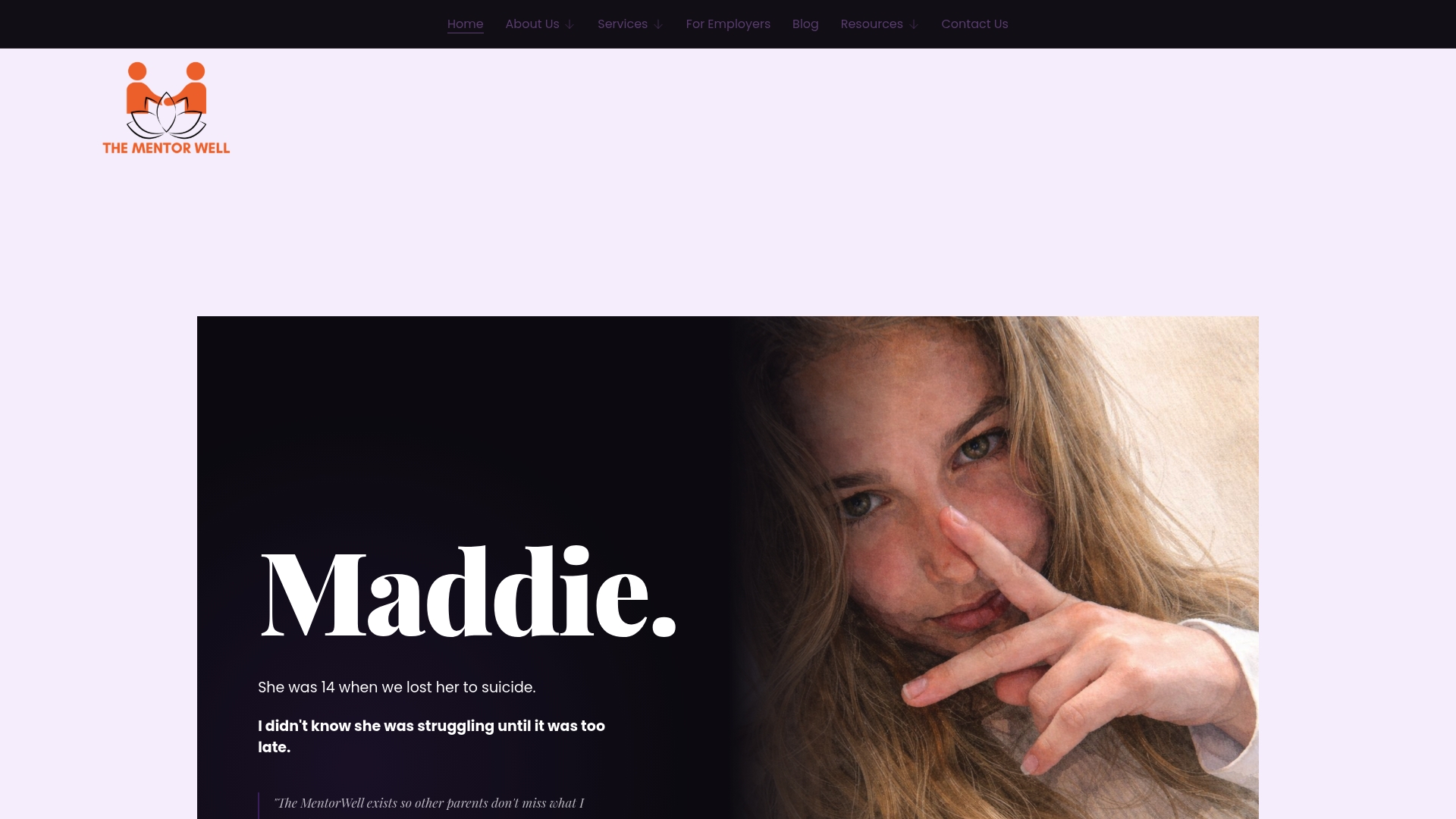
I started The MentorWell after losing my daughter Maddie. That kind of loss changes everything you thought you understood about paying attention. I thought I was paying attention. I was watching, but I was not always listening.
What I have come to believe, after years of working with families and young people, is that wellness culture is not something you build with a programme. You build it with presence. You build it by showing up the same way on a Tuesday afternoon as you do during a crisis. Young people notice consistency. They test it. And when they find it, they lean into it.
The hardest thing I see parents and educators do is wait. They wait for a sign that is impossible to miss. They wait until the situation is undeniable. But the window for early intervention is real, and it closes. The subtle signs are there long before the crisis. We just have to be willing to see them.
Treating young people as partners in their own wellness is not a soft idea. It is the most effective strategy we have. When a teenager feels that their voice shapes the plan, they invest in it. When they feel managed, they disengage. The research on positive youth development confirms this. So does every conversation I have had with a young person who finally felt heard.
Silence is not safety. It never was.
— Chris Coulter
Supporting youth wellness with The MentorWell
The MentorWell was built for exactly the moments this article describes: the quiet worry, the missed signal, the question of whether what you are seeing is serious. It exists because early awareness saves lives.
The MentorWell offers workshops, coaching, and the Teen Signal Check, a structured assessment for parents and caregivers to identify early warning signs in young people aged 8–25. The platform also connects families globally through a shared community, so no parent has to figure this out alone. Whether you are a parent, an educator, or a mental health advocate, The MentorWell provides the tools and support to act before a situation reaches crisis.
FAQ
What is youth wellness?
Youth wellness is the active, ongoing process of supporting the mental, emotional, physical, and social health of young people. It encompasses both prevention and early intervention across home, school, and community settings.
What are the signs that a young person is struggling?
Common signs include withdrawal from friends and family, changes in sleep or appetite, loss of interest in activities they previously enjoyed, and increased irritability. These signals often appear well before a crisis and are worth addressing early.
What is a youth workplace wellness programme?
A youth workplace wellness programme is a structured set of practices, including mentorship, growth-oriented feedback, and mental health support, designed to meet the specific needs of young workers aged roughly 16–25. These programmes improve retention and emotional health outcomes.
How do you build a youth wellness culture in a school?
Building a wellness culture in a school requires consistent shared language around emotional strengths, leadership alignment from administration to classroom teachers, and regular low-key check-ins rather than reactive crisis response.
How can parents support their teenager's emotional wellness at home?
Parents support emotional wellness most effectively by asking open questions, modelling emotional language, creating predictable routines, and learning to listen without immediately offering solutions. Early identification of warning signs is equally important.