
Mentoring for young adults, in the sense that matters here, means family and caregiver focused mental health support: coaching, check-ins, and screening tools built to catch emotional distress before it becomes a crisis. It is not career coaching. It is not networking. It is a parent noticing something is off, and knowing what to do in the next hour.
If your teen or young adult is in immediate danger, call or text 988, the National Suicide & Crisis Lifeline, right now. That comes first. Everything else in this article comes after.
If you are not in a crisis but something feels wrong, here is where to start tonight:
- Write down exactly what you've noticed. Dates, specific behaviours, not just a feeling.
- Ask one small, low-pressure question. Not "what's wrong with you," but "you've seemed quieter this week, want to tell me about it?"
- Take a free, confidential screener at MHAScreening.org to get language for what you're seeing.
Warning signs that last more than two weeks, or that noticeably disrupt school, family life, or friendships, warrant a conversation with a professional. That threshold isn't arbitrary. It comes from guidance parents can act on immediately, and it's the line we'll return to throughout this piece. Organizations like The MentorWell exist because too many families cross that line without knowing it, and by the time they notice, the window for an easy conversation has already closed; for guidance on trauma-informed care approaches, see atraumatic care in pediatric nursing.
Key Takeaways
Early detection of emotional distress in young people, paired with a calm, curiosity-led response, reduces risk and shortens the path back to steady ground.
| Point | Details |
|---|---|
| Document what you see | Write specific observations and dates before starting a conversation. |
| Check in regularly | Short, curiosity-led conversations build trust faster than one big talk. |
| Screen and escalate on schedule | A change lasting more than two weeks warrants a screening or professional contact. |
| Call 988 for immediate risk | This is the single non-negotiable first step in a crisis. |
| The MentorWell offers a starting point | Its Teen Signal Check, coaching, and workshops address each stage from noticing to acting. |
Table of Contents
- Why early detection matters more than career mentoring ever could
- What warning signs look like, and when they cross the line
- How to open the conversation tonight
- What mentoring programs and screening tools actually deliver
- How to choose a mentoring or screening program
- How The MentorWell fits this checklist
- When to escalate, and what a safety plan looks like
- What I'd do differently
- Start with a free screening tonight
- Resources worth bookmarking now
- Sources
- FAQ
Why early detection matters more than career mentoring ever could
Early detection changes outcomes. A caregiver who catches a shift in mood, sleep, or behaviour within weeks, not months, gives a young person a much shorter road back to steady ground. That's the entire premise behind this article, and it's worth being precise about what it is not.
This is not about pairing a young adult with a professional mentor for résumé advice or career guidance. That's a real and useful thing, but it's a different subject with a different audience. What we're talking about here is narrower and more urgent: parents, caregivers, and employers learning to notice emotional distress before it becomes a crisis, and connecting young people to support that actually addresses it.
The American Academy of Pediatrics has called youth mental health a national emergency, and its guidance leans hard on two things: screening early, and getting paediatricians involved before symptoms harden into something worse. That's not a bureaucratic recommendation. It's a practical one.
A few things worth knowing before you go further:
- SAMHSA's guidance for parents sets the benchmark most clinicians use: a consistent change lasting more than two weeks, or one that significantly disrupts daily functioning.
- Free screening tools like MHAScreening.org exist specifically so a parent doesn't need a diagnosis to start a conversation.
- The MentorWell was built around this exact gap between noticing something and knowing what to do about it.
What warning signs look like, and when they cross the line
Some signs are loud. Most aren't. The quiet ones are the ones parents miss, because they look like normal moodiness until you step back and count how long they've lasted.

Group them by what you're actually watching:
Emotional and behavioural changes
- Persistent sadness, flatness, or a loss of interest in things they used to care about
- Irritability, anger, or a short fuse that wasn't there before
- Withdrawal from friends, family, or activities they used to seek out
Functional changes
- Falling grades or sudden trouble concentrating
- Sleep that's either gone or excessive
- Skipping meals, or eating very differently than before
Safety-risk signs
- Talking about being a burden, or saying things feel pointless
- Giving away belongings, or sudden calm after a period of distress
- Any direct or indirect mention of self-harm or suicide
Here's the part most parents don't expect. In adults, depression often looks like sadness. In teens and young adults, it frequently shows up as anger. The Child Mind Institute has documented this pattern closely: irritability, snapping, slammed doors. It gets written off as "typical teenage behaviour" constantly, and that's exactly the mistake that costs families time they don't have.
The line to watch for is duration and spread. A bad week is a bad week. But when a change holds for more than two weeks, or when it starts touching more than one part of a young person's life, school, home, friendships, that's your signal to act, not wait and see.
Pro Tip: Look for the same shift showing up in two different places, not just one. A teen who's quiet at dinner but fine with friends is probably okay. A teen who's quiet at dinner, dropping grades, and pulling away from teammates all at once is showing you a pattern, not a mood.
If you believe your child is in immediate danger, the conversation isn't optional. Call 988. Tell them your child's age, what you've observed, and whether there's an immediate safety concern. They will walk you through next steps in real time.
How to open the conversation tonight
Interrogation shuts kids down. Curiosity opens them up. That's not a slogan, it's the difference between a conversation that ends in silence and one that ends in a real answer.
Here's a script that works better than "what's going on with you":
- Name what you've noticed, specifically. "I've noticed you've been sleeping a lot more the last couple weeks."
- Ask an open question, not a yes-or-no one. "What's been on your mind lately?"
- Sit in the silence. Don't fill it. Let them find the words.
- If they share something hard, resist the urge to fix it immediately. Just say, "Thank you for telling me."
- Set a time to check in again, even briefly, in a few days.
This is the whole method: notice, ask, listen, follow up. Repeat it weekly, not just when something looks wrong. A check-in that only happens during a crisis feels like an interrogation. One that happens regularly feels like care.
Regular, low-key check-ins do something a single big conversation can't: they build a baseline. When you talk to your kid every few days, you notice the shift faster, and they get used to you asking without it meaning something's wrong.
If you want a structured way to see what's underneath the behaviour, a free screener at MHAScreening.org can help. It's not a diagnosis. It's a conversation starter you can bring to a paediatrician, and it often makes that first clinical appointment far more productive.
If you're a manager or HR lead supporting an employee who's a caregiver, the same principle applies with more discretion. A simple, private check-in, "how are things at home, is there anything we can adjust this week," does more than any formal policy. For a longer walkthrough on that balance, see balancing work and teen mental health.
What mentoring programs and screening tools actually deliver
Not every program does the same job, and knowing which one you need saves a lot of wasted time.
- Peer parent support groups connect you with other caregivers who've been through it. Organizations like PLEO offer navigation and advocacy, often at no cost, and reduce the isolation that comes with worrying alone.
- Coach-led family mentoring pairs a family with ongoing guidance, regular check-ins, and practical strategies for the specific behaviours you're seeing.
- Screening and referral tools give you a structured snapshot of risk and point you toward the right next professional.
- Employer workshops train managers to recognize distress in employees who are parents or caregivers, and to respond without overstepping.
The MentorWell's Teen Signal Check is one example of a screening tool built specifically for this gap. It's designed for caregivers of young people aged 8 to 25, and it measures behavioural and emotional patterns, not a clinical diagnosis. A family uses it the way you'd use any good screener: as a starting point for a conversation with a paediatrician, not a replacement for one.
A tool worth trusting should tell you plainly what it measures, who it's for, and what it can't do. Anything vaguer than that deserves a second look.
| Point | Details |
|---|---|
| Peer support | Reduces isolation and connects families to local resources through groups like PLEO. |
| Coaching | Provides ongoing, structured guidance for families managing persistent behavioural change. |
| Screening tools | Offer a free, non-diagnostic starting point for a clinical conversation. |
| Employer workshops | Train managers to support caregiving employees without overstepping privacy. |
How to choose a mentoring or screening program
Every program should be able to answer these questions clearly. If it can't, that's your answer.
Ask directly:
- What age range does this serve, and does it match my situation?
- Is there clinical oversight behind the screening or coaching model?
- How is my family's data stored, and who sees it?
- What evidence supports this approach working?
- Does this fit our family's culture and values, and can employers integrate it into existing benefits?
Red flags to walk away from:
- No named clinical advisor or oversight structure
- Vague claims like "proven results" with no explanation of what was measured
- No clear answer about who has access to your data
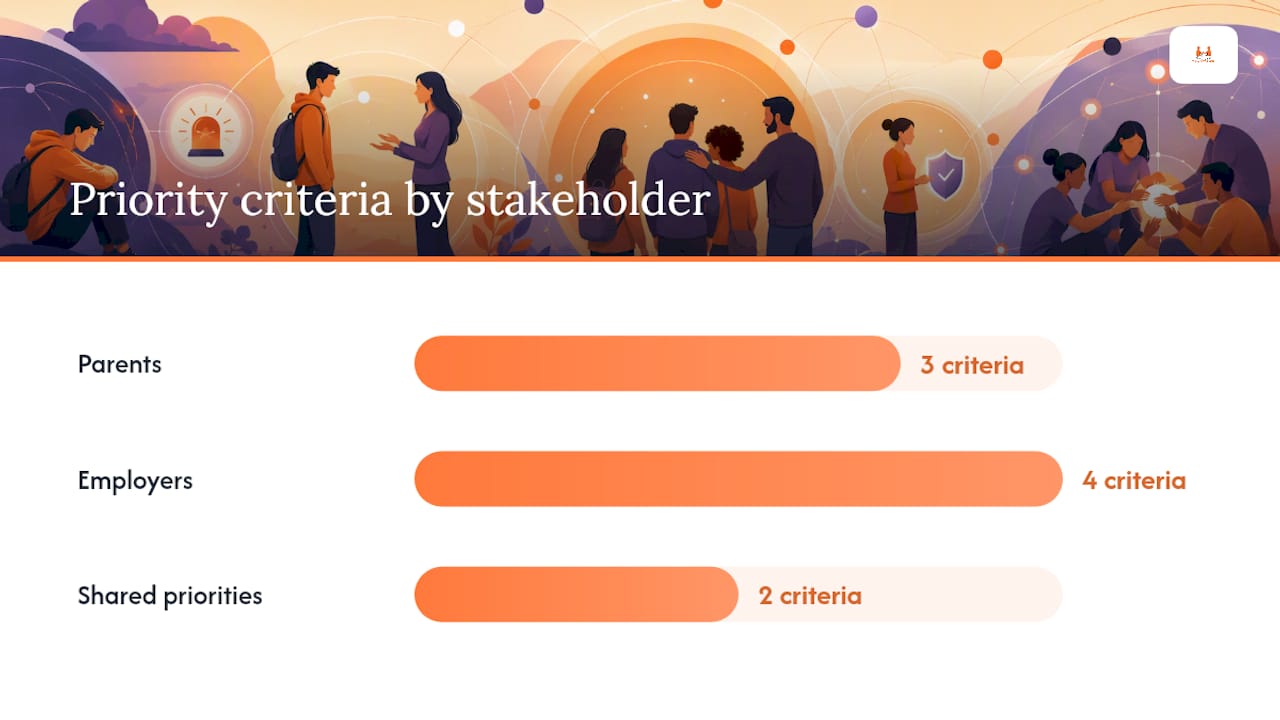
| Criterion | Why it matters | Priority for |
|---|---|---|
| Age range fit | A program built for young children won't serve a 22-year-old well. | Parents |
| Clinical oversight | Confirms the model is grounded in real practice, not just good intentions. | Parents & employers |
| Data privacy | Determines who can see sensitive family information. | Parents & employers |
| Evidence of effectiveness | Separates real outcomes from marketing language. | Employers |
| Employer integration | Determines if a program fits inside existing benefits or requires a separate process. | Employers |
How The MentorWell fits this checklist
The Teen Signal Check was built to answer exactly the questions above. It has clinical input behind its design, it's scoped for ages 8 to 25, and it tells families plainly what it measures and what it doesn't.
Beyond the screener, The MentorWell runs coach-led family mentoring, peer support groups for parents, and workshops for employers who want managers trained to notice and respond to caregiver strain. Each piece maps to a specific gap:
- Teen Signal Check → early screening and a conversation starter
- Family coaching → ongoing support once a concern surfaces
- Peer groups → connection with other parents carrying the same weight
- Employer workshops → training for managers who don't know what to say
Chris Coulter founded The MentorWell after losing his daughter Maddie. He built it because he wanted other parents to have the tools he didn't. That's not a marketing line. It's the reason the Teen Signal Check exists at all.
Pro Tip: If you're not sure where to start, the screener is the lowest-friction first step. It takes minutes, costs nothing, and gives you language for the conversation you've been avoiding.
When to escalate, and what a safety plan looks like
The two-week rule still applies here, but escalation isn't one step. It's a sequence.
- Screen. Use a free tool to get a clearer picture of what you're seeing.
- Contact a paediatrician or mental health provider. Bring your written observations and screening results.
- If risk is imminent, go to emergency care or call 988 immediately. Don't wait for a scheduled appointment.
What to bring to that first clinical appointment: your written log of specific behaviours and dates, screening results if you have them, and a list of any recent life changes, a breakup, a move, a loss.
A simple safety plan, written down and kept somewhere accessible, should include:
- Who to call first (988, a paediatrician, a trusted family member)
- What to remove from the home if risk is present (medications, weapons, anything dangerous)
- Who the young person trusts and can reach directly
For deeper reading, NAMI's guidance on what to look for and when to act and the AAP's guidance for parents are both worth bookmarking before you need them, not after.
What I'd do differently
I sit on the dock most mornings with my coffee before the house wakes up. That's when the question comes. What would I do differently.
I'd stop telling myself it was just a phase. I'd write down what I saw instead of explaining it away. I'd ask one more question before I let a quiet dinner pass as nothing.
None of this is about blame. It's about the two weeks between noticing and asking. That gap is where most families lose time they didn't know they had. You don't need to have the right words. You need to ask the small question tonight, the one that starts with what you've actually noticed, not what you're afraid of.
That's the whole thing. Not a program. Not a system. Just paying attention, out loud, before the window closes.
Start with a free screening tonight
The MentorWell is built for the exact moment you're in right now: noticing something, and not knowing whether it's serious. Unlike a general parenting resource or a one-time workshop, The MentorWell pairs a free screening tool with ongoing coaching, so you're not left alone after the first hard conversation.

The Teen Signal Check takes minutes and gives you language for what you're seeing, scoped specifically for young people aged 8 to 25. If a screening flags a concern, family coaching and peer support groups are there to help you act on it, not just name it. For employers, workshops help managers support caregiving staff without guesswork or overreach.
Start with a free Teen Signal Check, or book a briefing for your HR team, at The MentorWell.
Resources worth bookmarking now
- 988 / National Suicide & Crisis Lifeline: call or text for immediate crisis support.
- MHAScreening.org: free, anonymous screening tools and next-step guidance.
- NAMI Basics: family education on recognizing symptoms and building support networks.
- AAP / HealthyChildren.org: clinical guidance on danger signs and paediatrician involvement.
- PLEO: peer support and navigation for caregivers, often free in-region.
- Child Mind Institute: explains masked depression and irritability in youth.
- The MentorWell: screening, coaching, and employer workshops focused on prevention.
This article is general information, not a substitute for advice from a qualified doctor. Consult a qualified healthcare professional about your own circumstances before acting on anything here.
Sources
- How to talk with your child about mental health | SAMHSA
- Depression and anger: Why kids often express depression as irritability | Child Mind Institute
- Healthychildren
- Know the signs: Recognizing mental-health concerns in kids and teens | Mental Health America
- What to look for and when to act | NAMI
FAQ
What does "mentoring for young adults" mean in this context?
It refers to family and caregiver focused mental health support, coaching, check-ins, and screening tools aimed at catching emotional distress early, not career or academic mentoring.
How long should a warning sign last before I get help?
Guidance from SAMHSA recommends professional consultation when a consistent change lasts more than two weeks or significantly disrupts school, family, or activities.
Why does my teen seem angry instead of sad?
Depression in youth frequently presents as irritability or anger rather than visible sadness, a pattern the Child Mind Institute refers to as masked depression.
Are online screening tools accurate enough to trust?
Screeners like those on MHAScreening.org are not diagnostic, but they give useful next-step guidance and a starting point for a clinical conversation.
What should I do if I think my child is in immediate danger?
Call or text 988 right away. This is the single most important action to take before anything else in this article.
How does The MentorWell's Teen Signal Check work?
It's a free screening tool for caregivers of young people aged 8 to 25 that measures behavioural and emotional patterns and points families toward next steps, including coaching or a paediatrician referral.