
What are the key warning signs of teen mental health issues?
I used to think I knew my daughter. I watched her every morning at the kitchen table, cereal going soggy, earbuds in, not talking. I told myself it was just being a teenager.
Approximately 1 in 5 children and youth in Canada live with a mental health challenge, and about 70% of those challenges begin during childhood or adolescence. Most parents miss the early signs. Not because they don't care. Because the signs look a lot like ordinary teenage behaviour, until they don't.
Teen mental health warning signs are changes in mood, behaviour, or functioning that persist over weeks, interfere with daily life, and go beyond the normal ups and downs of growing up. The difference between a rough week and something that needs attention comes down to intensity, persistence, and impact on daily functioning.
Watch for these:
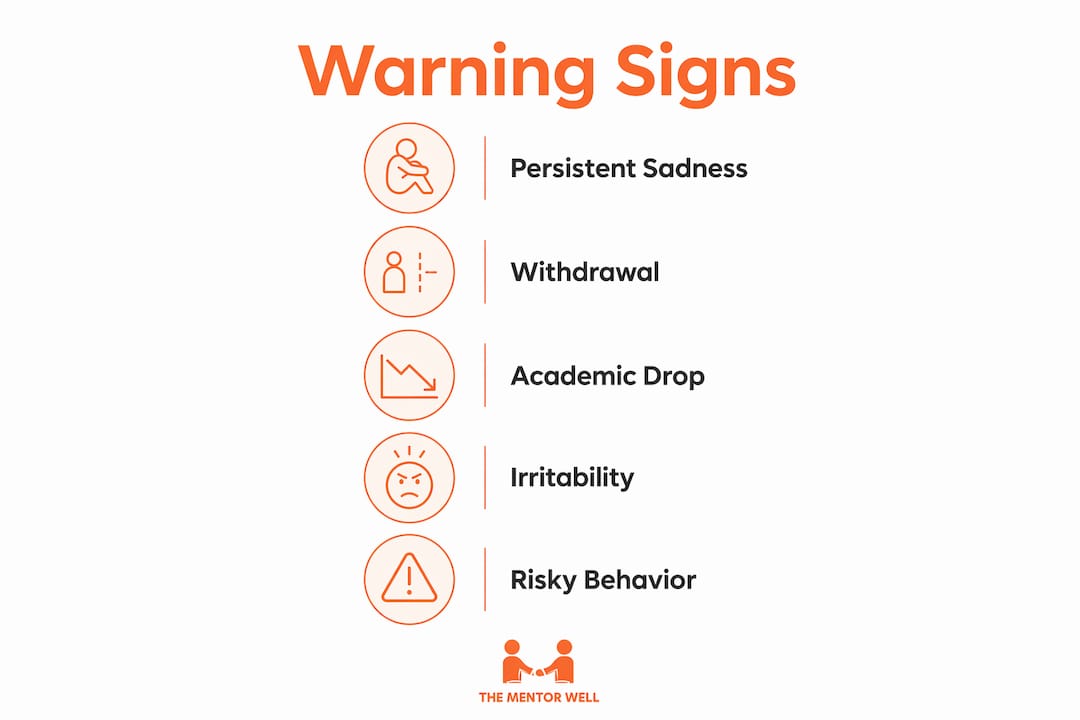
- Persistent sadness, hopelessness, or irritability lasting for an extended period
- Withdrawal from friends, family, and activities they once loved
- Significant decline in grades or school attendance
- Noticeable changes in sleep, appetite, or weight
- Frequent anger outbursts or extreme mood swings
- Talk of death, dying, or feeling like a burden to others
- Giving away prized possessions
- Loss of interest in hobbies or things that used to matter
- Physical complaints with no clear medical cause, such as headaches or stomach aches
- Increased use of alcohol or substances
Good days and bad days are normal. What separates typical teen behaviour from a mental health concern is whether the symptoms last weeks or months and get in the way of school, friendships, or home life.
Table of Contents
- Common mental health disorders affecting teenagers
- How parents and caregivers can support teens showing warning signs
- When and where to seek help: Canadian resources and crisis support
- How The MentorWell helps you detect and respond early
- The MentorWell: a direct path to early support
- Key takeaways
- FAQ
Common mental health disorders affecting teenagers
Knowing what you're looking at helps. These are the disorders most likely to show up in adolescence, and the signs that go with each.
- Depression: Persistent low mood, loss of interest, fatigue, feelings of worthlessness, and in some teens, irritability rather than sadness. Teen depression indicators can be subtle, especially in boys who may show anger before they show sadness.
- Anxiety disorders: Excessive worry, avoidance of social situations, panic attacks, physical tension, and difficulty concentrating. Signs of teen anxiety often appear as school refusal or constant reassurance-seeking.
- ADHD: Difficulty sustaining attention, impulsivity, disorganisation, and trouble completing tasks. ADHD in adolescents often looks like laziness or defiance to parents who don't know what they're seeing.
- Eating disorders: Preoccupation with food, weight, or body image; dramatic changes in eating habits; secretive behaviour around meals. Eating disorders carry serious medical risk and need early attention.
- Mood disorders: Extreme highs and lows, reckless behaviour, grandiosity, or periods of very little sleep followed by crashes.
- Substance use: Secretiveness, new friend groups, changes in motivation, and unexplained mood shifts can all signal a developing problem.
These disorders rarely announce themselves clearly. They tend to show up first as the warning signs listed above, which is exactly why paying attention to behaviour changes matters so much.
How parents and caregivers can support teens showing warning signs
You are not your teen's therapist. That distinction matters more than most parents realise.

Parents who act as allies who listen and validate, rather than trying to fix or solve, create the kind of safety a struggling teen actually needs. Trying to fix it yourself leads to frustration on both sides and can close the door you're trying to open.
Here's what actually helps:
- Observe quietly first. Write down what you notice, when it happens, and how long it's been going on. Patterns matter more than single incidents.
- Start the conversation gently. "I've noticed you seem tired lately. I'm not here to lecture. I just want you to know I'm paying attention." That's enough to start.
- Use the three-minute listening rule. Speak for no more than three minutes, then stop and listen. Limit your concerns to two or three specific observations, not a list of everything that's worrying you.
- Avoid interrogation. Questions that start with "why" often feel like accusations. "What's been going on?" lands differently than "Why are you acting like this?"
- Stay calm, even when it's hard. Your emotional reaction shapes whether your teen feels safe enough to keep talking.
- Keep showing up. Many teens aren't ready the first time you ask. Persistence without pressure, and ongoing safe dialogue, is what eventually opens things up.
Pro Tip: Read how to listen without pushing your teen away before you have the first conversation. The approach matters as much as the words.
You are the person who knows what normal looks like for your child. Trust your instincts and gather your observations before reaching out to a professional. That information will help whoever you talk to next.
When and where to seek help: Canadian resources and crisis support
Some signs require more than a conversation. When a teen is talking about death, giving away possessions, or showing a sudden, unexplained calm after a period of deep distress, that is a crisis. Get help immediately.

A teen who suddenly appears unusually happy after prolonged distress may have made a decision about ending their life. Don't wait to see if it passes.
Go to your nearest emergency room or call 911 if your teen:
- Expresses intent to harm themselves or others
- Has made a suicide attempt
- Is in immediate danger
For situations that are serious but not immediately life-threatening, these Canadian resources are available around the clock:
| Service | Contact | Available |
|---|---|---|
| Kids Help Phone (call) | 1-800-668-6868 | around the clock |
| Kids Help Phone (text) | Text CONNECT to 686868 | around the clock |
| Crisis Services Canada | — | around the clock |
| Emergency Services | 911 | around the clock |
Youth across Canada can access confidential support through Kids Help Phone by calling 1-800-668-6868 or texting CONNECT to 686868. The service is free, confidential, and available in both English and French.
For non-crisis situations, speak with your family doctor, a school counsellor, or contact the Canadian Mental Health Association (CMHA) in your province. Early intervention consistently leads to better long-term outcomes. Waiting until things get worse is the most common mistake parents make, and it's an understandable one. The signs are easy to explain away. Until they aren't.
If you're not sure whether what you're seeing rises to the level of professional concern, bring your written observations to a doctor anyway. Let them help you decide. That's what they're there for. You can also find family mental health resources online to help you prepare for that conversation.
How The MentorWell helps you detect and respond early
The MentorWell was built by Chris Coulter after losing his daughter Maddie. Not to process grief. To stop other families from standing where he stood.
The platform gives parents and caregivers concrete tools to act before a situation becomes a crisis:
- Teen Signal Check: A digital assessment designed for parents and caregivers to identify subtle distress signals in youth aged 8 to 25, before those signals become emergencies.
- Workshops and educational programmes: Structured learning for families and workplaces on recognising emotional distress and responding without making things worse.
- Coaching: One-on-one support for parents who need guidance on how to approach a struggling teen, what to say, and what to do next.
- Community connection: The MentorWell connects families across Canada and globally, so caregivers aren't navigating this alone. Shared experience matters when you're trying to figure out if what you're seeing is serious.
The platform's family support strategies are grounded in the same early-intervention principles that mental health professionals recommend. The difference is that The MentorWell puts those tools directly in the hands of parents, before a crisis forces the issue.
The MentorWell: a direct path to early support
Most parents don't need to be convinced that their teen's mental health matters. They need to know what to do with what they're seeing.

The MentorWell offers the Teen Signal Check, workshops, and coaching built specifically for families who want to act early, not react late. It's not a clinical service. It's a parent-facing resource created by someone who knows exactly what it costs to miss the signs. If you're reading this because something feels off with your teen, that instinct is worth following. Visit The MentorWell and start with the Teen Signal Check. It takes minutes and gives you something concrete to work with.
Key takeaways
Early recognition of teen mental health warning signs, combined with calm parental support and access to Canadian crisis resources, is the most reliable path to preventing a crisis.
| Point | Details |
|---|---|
| Prevalence in Canada | 1 in 5 Canadian youth live with a mental health challenge; most issues begin in childhood or adolescence. |
| Key warning signs | Persistent mood changes, withdrawal, academic decline, sleep or appetite shifts, and talk of death lasting weeks warrant professional attention. |
| Parental role | Listen and validate rather than fix; gather observations over time and trust your instincts before reaching out to a professional. |
| Crisis contacts | Kids Help Phone is available around the clock at 1-800-668-6868 or by texting CONNECT to 686868. |
| The MentorWell | The Teen Signal Check and coaching programmes give parents early-detection tools before a situation reaches crisis level. |
FAQ
What are the red flags for mental health in teens?
The clearest red flags are persistent sadness or irritability, withdrawal from friends and activities, significant academic decline, changes in sleep or appetite, and any talk of death or suicide. When these signs last more than two weeks and interfere with daily life, they warrant professional attention.
Does teenage depression go away on its own?
Sometimes mild low mood resolves with time, but clinical depression rarely does without support. Symptoms that persist for weeks, affect school or relationships, or include thoughts of self-harm need professional assessment, not a wait-and-see approach.
What are three warning signs that a teen may be struggling with anxiety?
The three most common signs are persistent, excessive worry that the teen can't control; avoidance of school, social situations, or activities they previously enjoyed; and physical symptoms like headaches, stomach aches, or sleep problems with no clear medical cause.
When should a parent call 911 for a teen's mental health?
Call 911 immediately if your teen has expressed intent to harm themselves or others, has made a suicide attempt, or is in immediate danger. A sudden, unexplained calm after a period of deep distress can also signal a crisis requiring immediate help.