
TL;DR:
- Parents should watch for signs like withdrawal and fatigue that indicate teen mental health struggles. Building routines with a dual-planning system and open, judgment-free communication can protect their well-being before problems worsen. Early professional support is crucial when symptoms persist and interfere with daily life.
Balancing work and teen mental health means building routines that protect your teenager's emotional limits, not just their schedule. When a teen carries a part-time job alongside school, the pressure compounds quietly. You might not see it until something breaks. The warning signs are real and recognisable, and early intervention makes a measurable difference in outcomes. This guide gives you the tools to spot the signals, build better routines with your teen, and know when to ask for outside help.
What warning signs show your teen's mental health is suffering?
Persistent sadness, irritability, and withdrawal lasting more than two weeks are the clearest indicators that a teen is struggling under pressure. That two-week threshold matters. It separates a rough week from a pattern that needs attention.
Physical symptoms often appear before emotional ones. Unexplained headaches, chronic fatigue, and stomach aches without a medical cause are the body's way of signalling that the mind is overloaded. Parents frequently dismiss these as growing pains or laziness. They are rarely either.
Watch for these specific changes:
- Sleep disruptions: falling asleep in class, sleeping through weekends, or lying awake until 2:00 AM
- Withdrawal from friends, family, or activities they previously loved
- Declining grades or missed assignments that are out of character
- Increased irritability or emotional outbursts over minor things
- Loss of appetite or noticeable changes in eating habits
- Expressions of hopelessness, worthlessness, or statements like "what's the point"
These subtle warning signs do not always arrive loudly. Sometimes a teen just goes quiet. That quiet deserves your attention.
Pro Tip: Trust your gut before you trust the explanation. If your teen says "I'm fine" but something feels off, that feeling is data. Parents who act on instinct early tend to catch problems before they escalate.
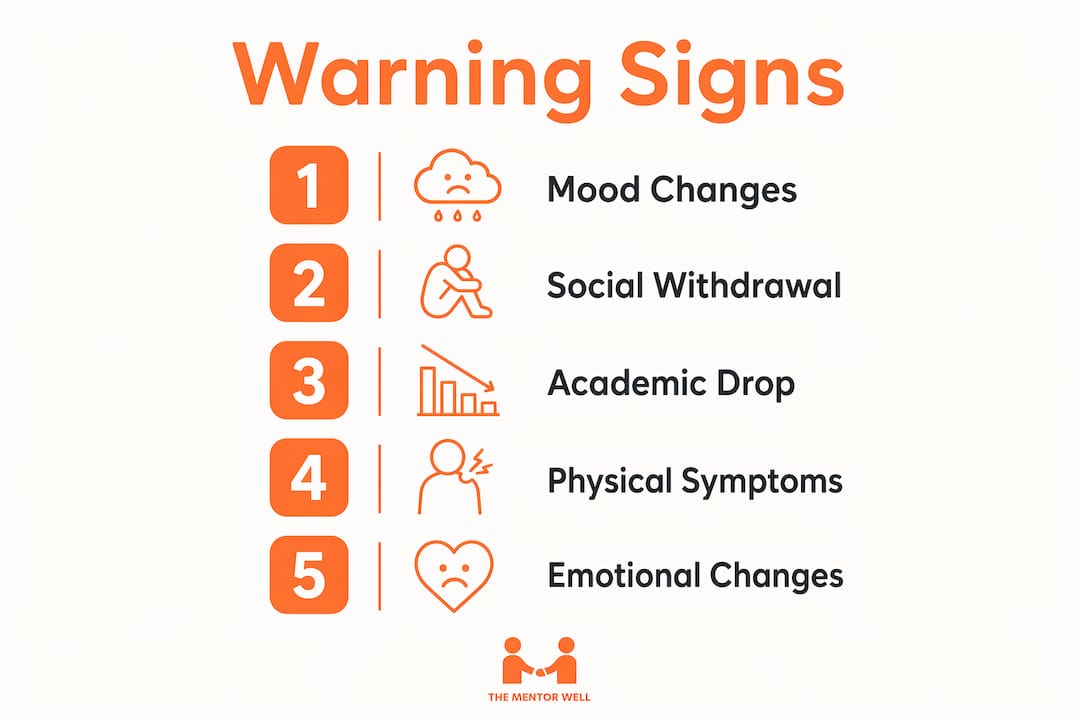
Academic performance is a lagging indicator. By the time grades drop, the emotional strain has usually been building for weeks. Watch the behaviour first, not the report card.
How can parents help teens build routines that protect their wellbeing?
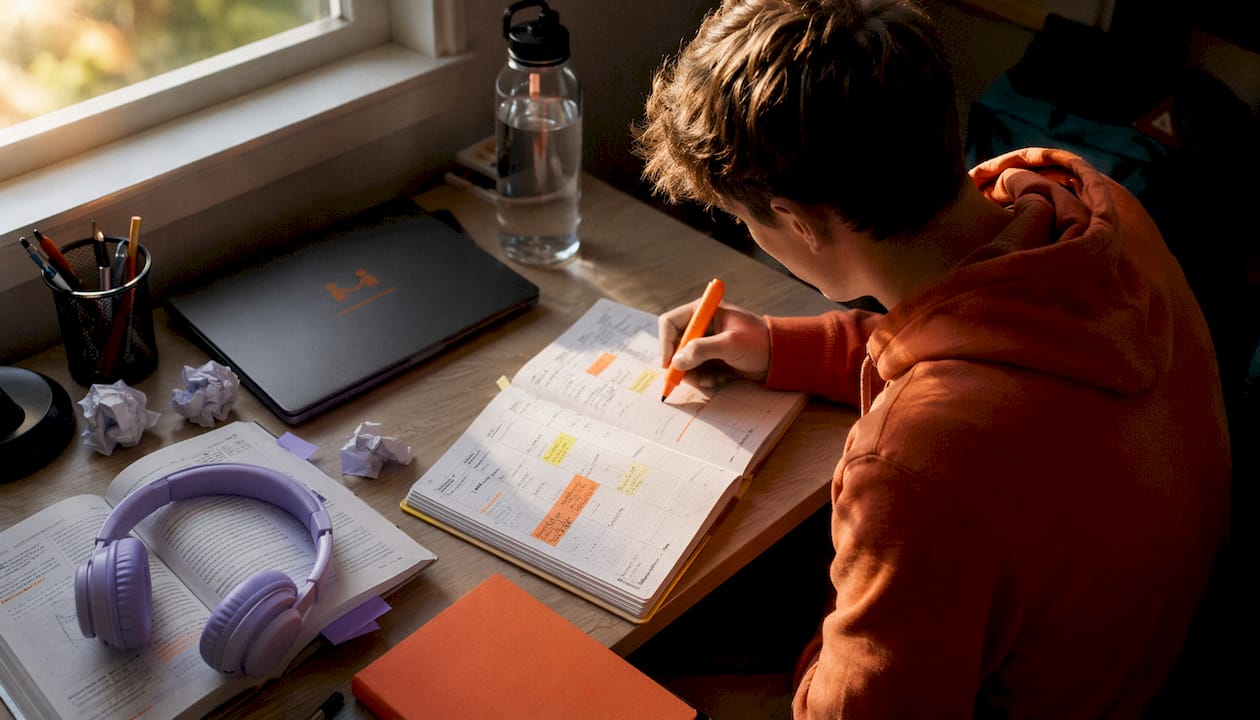
A dual-planning system separates fixed commitments from flexible self-care, and it reduces the cognitive load that comes with managing a busy schedule. The idea is simple. A digital calendar holds work shifts, school deadlines, and appointments. A physical planner holds study blocks, rest time, and personal care. Seeing both together helps teens understand that downtime is a commitment, not a gap to fill with more work.
Here is a practical approach to building that routine with your teen:
- Map the week together. Sit down on Sunday and place every fixed commitment on the digital calendar first. Work shifts, school, and extracurriculars go in before anything else.
- Schedule peak energy time for hard tasks. Difficult tasks during peak hours reduce stress and improve output. Ask your teen when they feel sharpest, morning, afternoon, or evening, and protect that window for demanding schoolwork.
- Block rest as non-negotiable. Add at least one full rest block per day. This is not optional. Treat it the way you treat a work shift.
- Include physical movement. Even a 20-minute walk changes the body's stress response. It does not need to be a gym session.
- Review and adjust weekly. Routines that never flex break. A quick Sunday check-in keeps the system working without turning it into a rigid cage.
Pro Tip: Encourage your teen to do independent work before group projects or social commitments. Completing solo tasks first preserves energy and reduces the anxiety of unfinished work hanging over social time.
Balance is about rhythm, not perfection. A week where everything goes sideways is not a failure. It is information about what needs adjusting.
What communication approaches reduce stress rather than add to it?
Judgement-free check-ins that focus on emotional state rather than grades or productivity build the kind of trust that keeps a teen talking. The instinct to fix things is strong in parents. Resist it. A teen who feels heard is far more likely to ask for help than one who expects a lecture.
The way you ask matters as much as when you ask. Closed questions get closed answers. "Are you okay?" gets "yeah." Open questions open doors.
Try these instead:
- "What part of this week felt the hardest?"
- "Is there anything about work or school that's been sitting heavy on you?"
- "What would make next week feel a little easier?"
- "What do you actually need from me right now?"
The last question is the most important one. Sometimes teens need advice. More often, they need to feel that someone is sitting with them in the difficulty without trying to make it disappear.
Modelling healthy stress management as a parent sends a signal that self-care is necessary, not a sign of weakness. When your teen sees you take a walk after a hard day, or say "I need a break," they learn that those responses are acceptable. That lesson is more powerful than any conversation.
Academic stress is more often a sign of systemic pressure than poor time management. Pushing harder rarely helps. Building resilience and coping skills does. A teen who learns to name what they are feeling, and ask for what they need, carries that skill for life.
How do you know when your teen needs professional support?
Early intervention dramatically improves outcomes and builds lifelong emotional skills. The window for early action matters. Waiting to see if things improve on their own is the most common mistake parents make, and the most costly.
Seek professional support when you observe:
- Persistent anxiety or panic that interferes with daily functioning
- Hopelessness or statements that suggest your teen sees no way forward
- Significant withdrawal from all social contact over several weeks
- Sleep or appetite disturbances that do not resolve with routine changes
- A noticeable and sustained drop in academic and social functioning
- Any mention of self-harm or not wanting to be here
These are not phases. They are signals.
When a teen's symptoms persist and begin to affect their ability to function at school, at work, or in relationships, that is the point where professional counselling or therapy becomes necessary. Temporary lower grades during a period of mental health recovery are acceptable. Ignoring the recovery is not.
Involve your teen in the decision to seek help. Telling a teenager they are going to therapy often creates resistance. Asking them to come with you to explore options creates partnership. The difference in how they engage with the process is significant.
The family support strategies that work best combine professional guidance with consistent parental presence. Neither replaces the other. A counsellor provides tools. You provide the relationship that makes those tools feel safe to use.
Pro Tip: Frame professional help as a resource, not a last resort. Saying "lots of people talk to someone when things get heavy" removes the stigma and makes it easier for your teen to say yes.
Self-care practices that support mental health, such as consistent sleep, movement, and connection, work alongside professional support, not instead of it.
Key takeaways
Balancing work and teen mental health requires consistent parental attention, honest communication, and the willingness to act before a crisis arrives.
| Point | Details |
|---|---|
| Spot the pattern early | Withdrawal, irritability, and physical symptoms lasting two or more weeks signal a need for action. |
| Build routines with your teen | A dual-planning system that separates fixed commitments from rest blocks reduces cognitive overload. |
| Ask open questions | Questions that invite feeling rather than reporting build the trust teens need to ask for help. |
| Act on instinct | Parents who trust their gut and seek help early prevent escalation before it becomes a crisis. |
| Professional help is a resource | Involving your teen in the decision to seek counselling reduces resistance and improves engagement. |
What I've learned about sitting with the worry
I used to think that staying busy meant I was doing something. That if I kept moving, kept planning, kept fixing, I was being a good parent. I was wrong about that.
The hardest thing I have had to learn is that presence is not the same as action. Sometimes the most useful thing you can do for your teen is sit in the kitchen while they do their homework and say nothing. Not ask how it went. Not offer a solution. Just be there, close enough that they know the door is open.
I missed signals I should have caught. Not because I was not paying attention, but because I was paying attention to the wrong things. Grades. Schedules. Whether the homework was done. The things that are easy to measure. The things that feel like parenting from the outside.
What I know now is that the quiet changes are the ones that matter most. The teen who stops mentioning their friends. The one who used to complain about work and now says nothing at all. Silence is not safety. It is often the opposite.
The mental health check-ins that work are not formal. They are a car ride. A walk. A question asked without a pen and paper. They work because they feel like nothing, and that is exactly why teens let their guard down in them.
You will not get this right every time. Neither will I. But small, consistent effort, showing up, asking the quiet questions, trusting what you feel, matters more than any single dramatic intervention. The window does not stay open forever. But it is open right now.
— Chris Coulter
How The MentorWell supports families navigating this
When the worry is constant and you are not sure what to do next, having a clear place to start makes a real difference.

The MentorWell was built for exactly this moment. Founded in memory of Maddie Coulter, the platform offers parents practical tools including the Teen Signal Check, an assessment designed to help caregivers identify subtle warning signs in youth aged 8 to 25. Alongside that, The MentorWell provides coaching, workshops, and a global community of families who understand what you are carrying. If you are looking for a structured way to support your teen through the pressure of work, school, and everything in between, The MentorWell is a place to start.
FAQ
What are the first signs a teen's mental health is suffering from work stress?
Persistent sadness, irritability, and withdrawal lasting more than two weeks are the clearest early signs. Physical symptoms like unexplained headaches and fatigue often appear before emotional ones.
How many hours of work per week is too much for a teen in school?
No universal threshold applies to every teen, but when work hours consistently displace sleep, study time, or social connection, the load is too heavy. Watch function, not just hours.
How do I talk to my teen about stress without making it worse?
Use open-ended questions focused on feelings rather than outcomes, and resist the urge to fix things immediately. Validating teen emotions builds trust more reliably than problem-solving does.
When should I consider professional help for my teen?
Seek professional support when symptoms persist for several weeks and begin to affect school, work, or social functioning. Early intervention significantly improves long-term outcomes.
What is a dual-planning system for teens?
A dual-planning system uses a digital calendar for fixed commitments and a physical planner for study blocks and self-care. Separating the two reduces cognitive overload and makes rest feel as real as any other obligation.