
If your child is struggling right now, here's the direct answer: global family mental health support networks can usually be grouped into key categories: local crisis hotlines and international networks, moderated peer groups, school-based supports, and specialist NGO directories. Most families often need to touch multiple items of these, not necessarily all, and the right combination depends on how urgent things feel today.
Here's what to do in the next half hour:
- Save a crisis line in your phone right now (in Canada, that's Kids Help Phone, recommended in CMHA's caregiver guidance).
- Call your child's school counsellor or family doctor for a local referral.
- Check one moderated online peer group for caregivers, like Caregiver Connection.
- Consider The MentorWell if you want a family-facing tool built specifically for early warning signs in kids aged 8 to 25.
- Identify urgency level.
- Contact one professional and one peer resource.
- Follow up within 48 hours.
Key Takeaways
Reliable global family mental health support combines a crisis hotline, one professional referral, and a vetted peer or moderated network matched to your child's age.
| Point | Details |
|---|---|
| Start with two contacts | Call one crisis line and one local referral source (school or clinic) within the first day. |
| Match support to age | Children need adult-led structure; teens want privacy with oversight; young adults consent for themselves. |
| Vet before you trust | Check for moderation policies, clinician affiliations, and a clear crisis escalation protocol before joining any group. |
| Privacy travels across borders | Data protection and consent rules differ by country, so ask which jurisdiction's law applies before sharing details. |
| The MentorWell fills the gap before crisis | Its Teen Signal Check, coaching, and parent community focus specifically on early signs in youth aged 8 to 25. |
This article is general information, not a substitute for advice from a qualified doctor. Consult a qualified healthcare professional about your own circumstances before acting on anything here.
Table of Contents
- Where to find global family mental health support networks
- How do you evaluate a mental health network before trusting it?
- What support works best for ages 8-12, 13-17, and 18-25?
- Is it safe for youth to use online mental health support?
- When should you escalate to professional or emergency care?
- How can families start or join a support network?
- Cultural and language considerations in accessing global mental health networks
- Technology accessibility and the digital divide
- Legal and ethical considerations for international mental health support
- How The MentorWell supports families right now
- Sources
- FAQ
Where to find global family mental health support networks
Every network does something different, and knowing the difference saves you time when time matters.
- Crisis hotlines and text lines exist for immediate risk. They're free, available around the clock, and don't require an appointment.
- Moderated peer support groups connect caregivers who've lived through similar things. All IN Family Peer Support runs groups led by people with lived experience, not clinicians, which matters when you want to talk to someone who's actually been there.
- International NGOs and directories aggregate vetted local services across countries, useful for families who've relocated or have kids studying abroad.
- School and workplace programs are often the fastest, cheapest first step because they're already connected to your child's daily life.
- Teletherapy platforms fill gaps where local specialists are scarce or waitlists run long.
- Community clinics offer sliding-scale or public-funded care, though wait times vary widely by region.
When a family reaches out for the first time, they're rarely calling because things are calm. CMHA's By Their Side guide points adult allies toward structured conversation tools and toward Kids Help Phone precisely because urgency and confusion tend to arrive together.
Availability shifts by time zone, language, and internet access, so free hotlines and text lines usually work best as the first call. Paid programs, including workshops and coaching, tend to come later, once you know what kind of support your family actually needs.
How do you evaluate a mental health network before trusting it?
Not every group calling itself a support network deserves your family's information or your child's trust. Run through this before signing up for anything:
- Does it have a written moderation and safeguarding policy?
- Are moderators or facilitators affiliated with licensed clinicians or a health system?
- Is there a clear crisis escalation protocol, including a live human contact, not just a bot?
- Does the privacy policy explain age-appropriate consent and what happens to your child's data?
- Are language and accessibility supports actually available, not just promised?
Red flags to walk away from:
- No stated plan for handling a disclosure of self-harm or suicidal thoughts.
- Pressure to purchase something before you've even described the problem.
- No privacy statement, or one that's vague about who sees your child's messages.
- Anonymous-only moderation with zero named oversight.
Call before you commit. Ask who reviews content, what happens if your teenager says something alarming at 2 a.m., and whether a real person answers. A group that hesitates on any of those questions has already told you what you need to know.
What support works best for ages 8-12, 13-17, and 18-25?
Age changes almost everything about what "support" should look like.
- Ages 8 to 12 need adult-led structure. Parents stay closely involved, consent is fully yours, and school counsellors are usually the right first stop. A young child doesn't need a peer forum; they need a trusted adult noticing changes early.
- Ages 13 to 17 start wanting privacy, and that's developmentally normal, not a red flag. Moderated teen peer groups can work well here, but parental involvement in consent and crisis planning still matters.
- Ages 18 to 25 are legal adults in most jurisdictions. They can consent to their own care, and peer mentoring from others slightly further along often lands better than anything parent-led.
Don't force a 22-year-old into a family therapy session they didn't agree to. Don't leave an 11-year-old to navigate an anonymous online forum alone. Match the setting to the stage: school counsellor for the child, moderated teen group for the adolescent, peer mentoring or a campus service for the emerging adult.
Is it safe for youth to use online mental health support?
Online support helps, but it carries real privacy risk. Before your kid logs into anything, check these:
- Read the platform's data retention policy. How long do they keep chat logs?
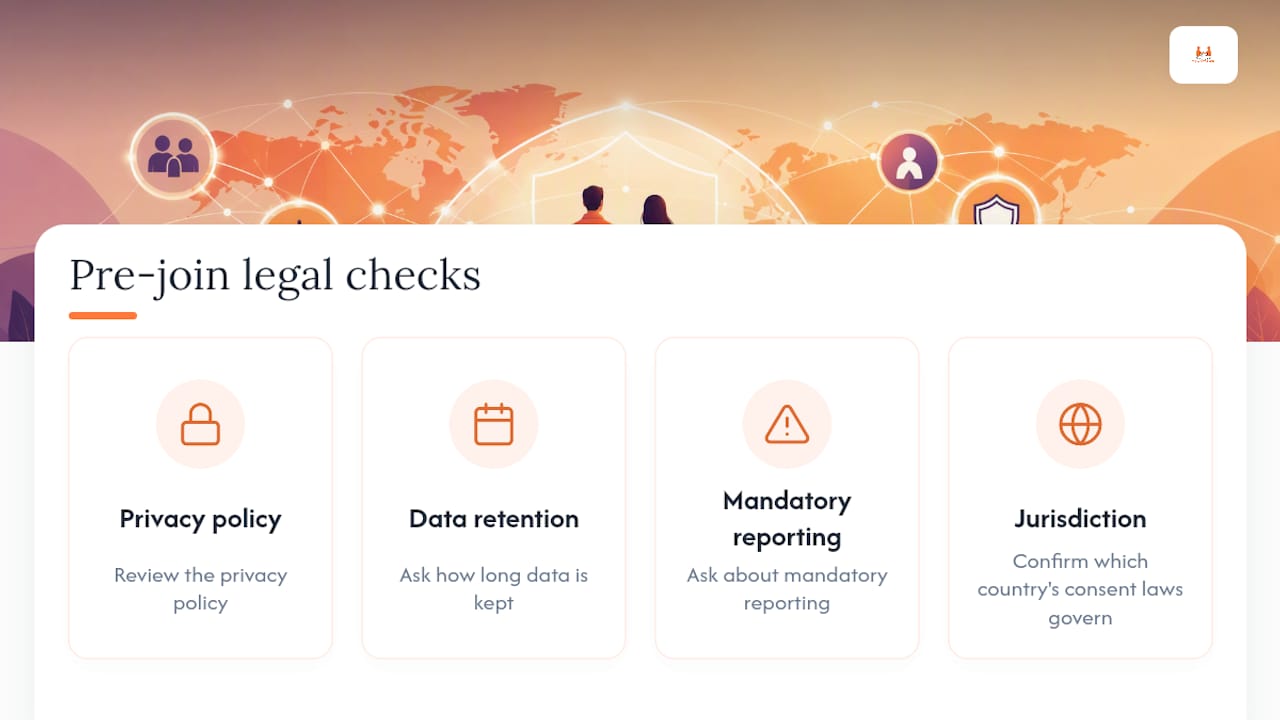
- Ask directly whether the service has mandatory reporting obligations, and under which country's law.
- Encourage your teen to skip using their full name or specific location in group chats.
- Confirm whether data crosses borders, since consent standards differ sharply between jurisdictions.
Consent isn't a checkbox you tick once. It's an ongoing conversation about what your kid is comfortable sharing, with whom, and why.
Talk to your teen before they join anything, not after. Ask what they'd want you to know if something felt wrong online, and agree on that boundary together.
When should you escalate to professional or emergency care?
Some signs mean you stop waiting and act immediately: sudden withdrawal from everyone, any mention of suicide or wanting to disappear, or a sharp drop in school or work functioning that lasts more than a few days.
Immediate steps:
- Stay with your child if you sense danger. Don't leave them alone.
- Remove access to means, medications, weapons, anything that raises risk.
- Call local emergency services or a crisis line right away.
- Share specific, clear details with any clinician involved, not a vague summary.
- Write down what changed and when.
- Call the crisis line or emergency number.
- Follow up with your child's school and clinician within 24 hours.
Pro Tip: Build a one-page safety plan now, while things are calm, so nobody has to improvise it during a crisis.
How can families start or join a support network?
Getting connected usually takes a handful of concrete steps, not months of research; understanding the roles of different caregivers and the supports they can access is crucial, as explained in Secondary caregiver support: what it means and who it helps.
- Search a directory like PCMH or All IN Family Peer Support for a group near you or virtual.
- Contact your child's school counsellor and your community clinic in the same week.
- Try one moderated online group before committing to anything paid.
- Book an intake appointment if a clinician recommends it.
If you're starting your own family peer group, set ground rules early:
- Confidentiality stays inside the room, always.
- Everyone gets a turn to speak before anyone speaks twice.
- Agree in advance who calls the crisis line if someone discloses risk mid-meeting.
List your group with a regional directory once it's running, so families searching the same way you did can find it too. Networks grow because someone did exactly this first.
Cultural and language considerations in accessing global mental health networks
A support network built for one culture doesn't automatically translate to another. Some families come from backgrounds where talking about mental health openly is discouraged, or where the whole idea of a "peer support group" feels foreign compared to relying on extended family or faith leaders. That's not a barrier to fix. It's a starting point to work from.
Language matters just as much as culture. A hotline that only operates in English shuts out a household where a parent is more comfortable in Punjabi, Tagalog, or Arabic. Look for services that list specific languages they support, not a vague claim of "multilingual services available." Kids Help Phone, for instance, has expanded language access precisely because CMHA's guidance recognizes that a translated pamphlet isn't the same as a counsellor who speaks your language fluently.
Stigma also shifts by community, and it shifts inside families too. A teenager might be more willing to talk to a stranger on a text line than to a relative, simply because there's no fear of disappointing anyone. That's worth remembering before assuming your child's silence at home means they're not talking to anyone at all.
If English isn't your family's first language, ask any service directly whether they offer interpretation, and whether that interpreter understands the cultural context behind what your child is describing, not just the words.
Technology accessibility and the digital divide
Not every family has the same access to the internet, and that gap shapes who actually gets to use these networks. A teletherapy platform means nothing to a household without reliable broadband, and a video-based peer group is useless on a shared family phone with limited data.
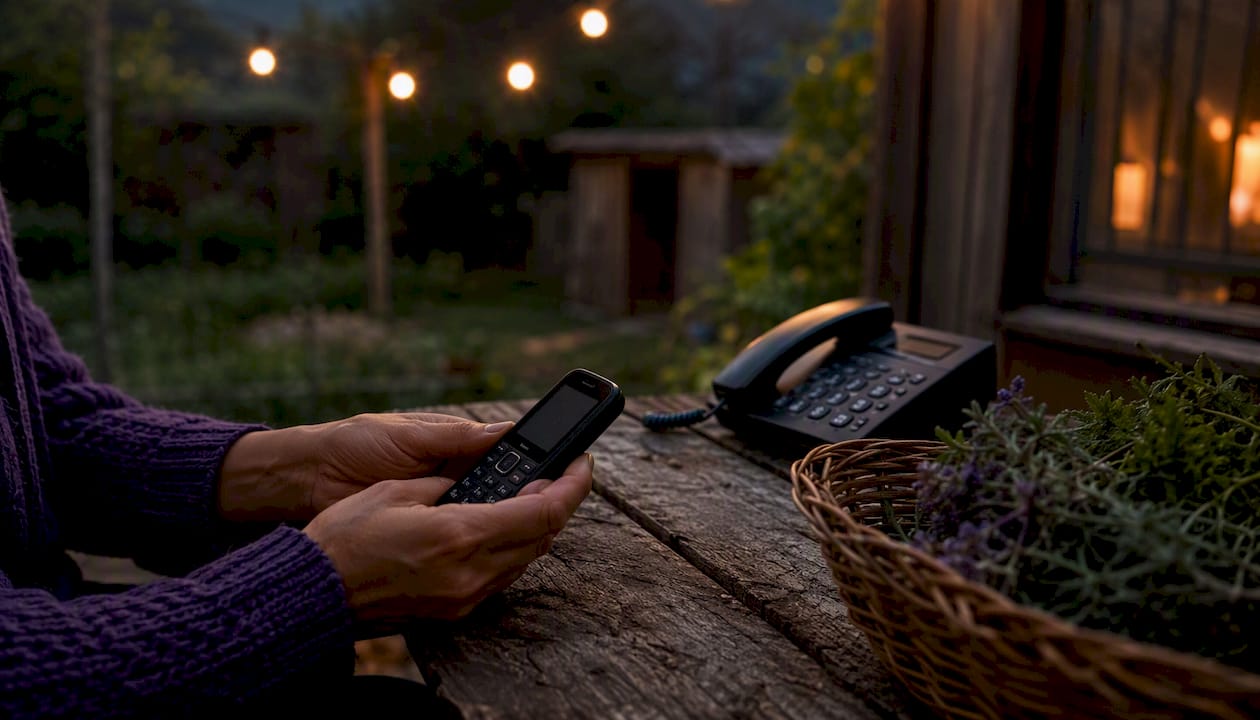
Rural families often face the sharpest version of this. A crisis line might be the only support available at 11 p.m. in a town with no local clinic, which is exactly why phone-based and text-based options matter so much more than app-only services in those areas.
Cost compounds the problem. Some platforms require a device capable of running specific software, or a data plan that not every family can afford. Free hotlines and text lines exist as a deliberate workaround for this, and it's worth prioritizing them precisely because they ask the least of a family's resources.
Older teens and young adults tend to navigate digital tools more easily than younger kids or some caregivers themselves, which can create an odd dynamic where the person in crisis is more tech-fluent than the person trying to help. Ask your kid to show you how something works before assuming you understand the platform they're using.
Legal and ethical considerations for international mental health support
Data protection law changes completely depending on where a service is based and where your family lives. A platform operating out of the European Union follows different consent rules than one based in the United States, and a family using an international service needs to understand which country's law actually governs their child's information.
Mandatory reporting obligations also vary. A clinician in one province or state might be legally required to report certain disclosures that a peer moderator elsewhere has no obligation to report at all. This isn't a technicality. It changes what your teenager should expect if they say something serious in a chat window.
Age of consent for mental health treatment differs by jurisdiction too, sometimes significantly. A 16 year old might be able to consent to their own therapy in one region and require parental consent in another. Before enrolling your child in any cross-border program, ask directly which country's laws apply and what that means for privacy, consent, and reporting.
None of this should stop a family from using international resources. It just means asking the right question before you share personal details, not after.
A father's note on early signs
I've spent years thinking about the morning I missed something. Not a dramatic sign, just a small one. That's the thing about early warning signs: they rarely announce themselves. What would you notice today, if you slowed down enough to look?
How The MentorWell supports families right now
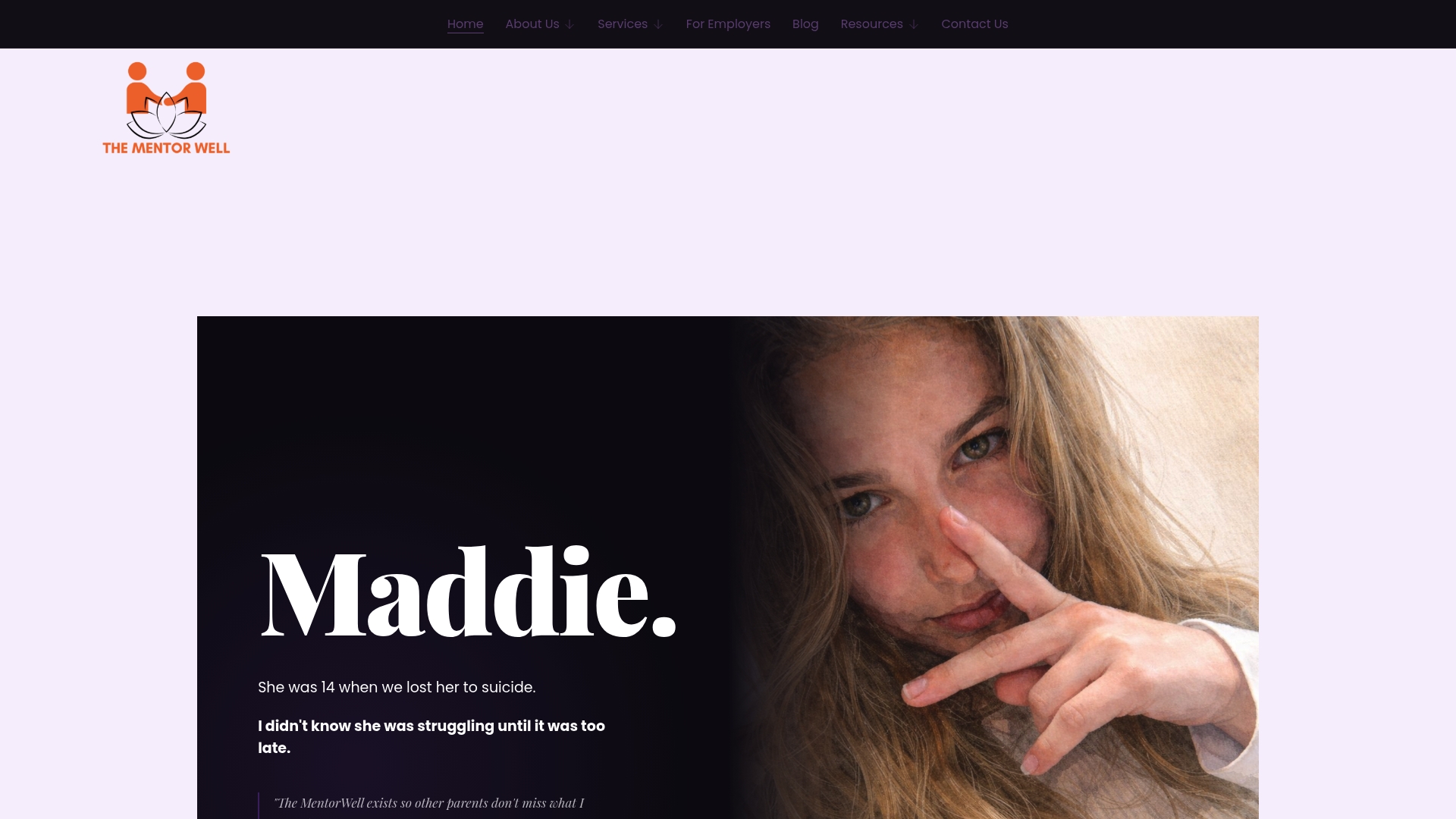
The MentorWell exists for the exact moment you're in: watching for signs, unsure what's serious, wanting something concrete to do today instead of another article to read. It was built to catch what's easy to miss, not after a crisis, but before one.
Families can access:
- Live and on-demand workshops on early intervention and crisis prevention.
- One-on-one coaching for parents navigating a specific concern.
- The Teen Signal Check, a free assessment for spotting subtle warning signs in kids aged 8 to 25.
- A parent peer community connecting families going through similar things.
- Referral support when a situation needs more than a workshop can offer.
If you're not sure where your family fits in everything covered above, The MentorWell is a reasonable next step: start with the Teen Signal Check today, and book a coaching session if it flags something worth a closer look.
Sources
Chris Coulter built The MentorWell after losing his daughter Maddie, and the whole platform exists because he kept asking what he'd do differently. That question shaped everything, including the tools it offers today.
The MentorWell provides workshops, live and on-demand coaching, the Teen Signal Check assessment, a parent peer community, and referral support for families raising kids aged 8 to 25.
The organisations cited throughout this piece, CMHA, PCMH, All IN Family Peer Support, and CAMH, were chosen because they publish their methods openly and name their clinical affiliations.
This article draws on national caregiver guidance, peer-support organisation materials, and evidence-based toolkits. It doesn't replace a conversation with a clinician who knows your family.
FAQ
What is the fastest way to find mental health support for my teen?
Call a local crisis line first, then contact your child's school counsellor or family doctor for a same-week referral, and consider a free tool like The MentorWell's Teen Signal Check to clarify what you're seeing.
Are global peer support networks safe for teenagers to use?
They can be, if the network publishes a moderation policy, names clinical affiliations, and has a clear crisis escalation plan; skip any group missing all three.
How does support differ for a 10-year-old versus a 20-year-old?
Children aged 8 to 12 need adult-led, school-connected support with full parental consent, while young adults aged 18 to 25 can consent to their own care and often respond better to peer mentoring than family-led sessions.
What should I check before my child joins an online support group?
Review the privacy policy, ask about data retention and mandatory reporting, and confirm which country's consent laws govern the platform before your child shares anything personal.
Does The MentorWell replace professional treatment?
No. The MentorWell focuses on early detection and prevention through its Teen Signal Check, coaching, and community, and refers families to clinical care when a situation needs it.