
TL;DR:
- Emotionally intelligent leadership involves recognizing emotions as valuable data and responding to help young people feel seen and safe. Taking quick actions like observing behavioral changes, opening honest conversations, and utilizing available support lines can promote early mental health intervention.
Emotionally intelligent leadership means reading emotions as useful data and responding so the young people around you feel seen and safe. Right now, today, you can do three things: observe one behaviour change in the young person you're concerned about, say something simple and open ("I've noticed you seem quieter lately — I'm here"), and save Kids Help Phone (1-800-668-6868) in your phone.
Why it matters in 24 hours:
- Most adult mental health problems begin in youth, often years before anyone intervenes.
- Early identification is directly linked to better school outcomes and longer-term health.
Your 24-hour plan:
- Observe and write down one specific change you've noticed (sleep, appetite, withdrawal, grades).
- Open a conversation using the script in Section 5 below.
- Contact one support: Kids Help Phone, the Canadian Mental Health Association's local branch, or The MentorWell's Teen Signal Check.
Table of Contents
- What does emotionally intelligent leadership actually look like?
- Why this approach changes outcomes for youth aged 8–25
- Age-banded warning signs of emotional distress
- How to open the conversation and respond safely
- How to build systems that catch distress early
- Trusted Canadian tools and resources
- When do you need professional or emergency help?
- Your action plan for the next 24 hours, week, and month
- Key takeaways
- What I know now that I wish I'd known then
- What The MentorWell offers parents and employers
- Useful Canadian sources and further reading
- FAQ
What does emotionally intelligent leadership actually look like?
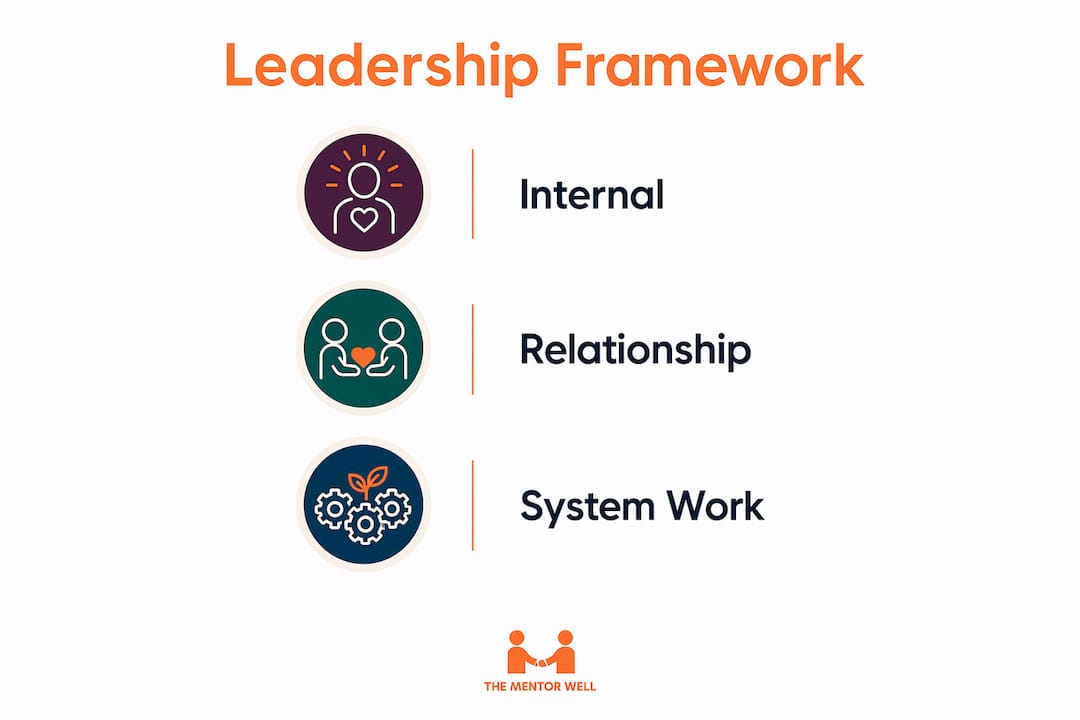
Emotional intelligence in leadership is not about avoiding hard feelings. It is the ability to read emotions as data and respond so relationships stay safe and repairable. A three-part framework makes this practical: internal work, relationship work, and system work.
Internal work means regulating yourself before you respond. A parent who notices their own frustration rising before a hard conversation, pauses, and breathes is doing internal work. A manager who checks their own stress before a one-on-one is doing the same.
Relationship work means being present, validating what you hear, and listening without fixing. At home: sitting beside your teenager without your phone. At work: asking "how are you actually doing?" and waiting for the real answer.
System work means building structures that reduce risk before a crisis arrives. Family dinner check-ins. A workplace policy that names a confidential reporting path. Role clarity so no young person wonders who they can talk to.
Pro Tip: Before a difficult conversation, take two slow breaths and name your own emotion silently ("I'm anxious about this"). That 10-second internal check makes you measurably calmer and keeps the conversation from escalating before it starts.
Why this approach changes outcomes for youth aged 8–25
Leaders who interpret emotions effectively model calm for everyone around them. For children and teenagers, that modelling is not a soft benefit. It is how they learn to regulate their own responses.
A majority of the most highly effective and healthy teams are managed by leaders with effective emotional intelligence, and those teams experience lower turnover and absenteeism. (The State of Emotional Intelligence Report, Search Inside Yourself Global, 2020; Korn Ferry Report, 2021)
The same principle applies at home. A caregiver who stays regulated during a teenager's meltdown teaches the teenager that feelings are survivable. One who escalates teaches the opposite.
Early detection is linked to better academic results and adult health outcomes. The three-part framework used by The MentorWell turns that research into daily practice, not a one-off conversation.
Age-banded warning signs of emotional distress
Watch for changes across at least two areas of life — school, home, and social. A single change may be normal. Two or more settings affected is a stronger signal.
| Age band | Observable warning signs |
|---|---|
| — | Frequent stomachaches or headaches with no medical cause; refusing school; sudden loss of friends; persistent tearfulness; sleep disruption; regression (bedwetting, clinginess); explosive anger disproportionate to the trigger |
| — | Withdrawal from family and friends; drop in grades or attendance; giving away possessions; increased risk-taking; talk of hopelessness or worthlessness; changes in eating; self-harm marks; substance use |
| — | Missing work or classes repeatedly; isolating socially; expressing that life has no point; significant weight change; inability to manage daily tasks; talk of being a burden; researching methods of self-harm |
Timeline guidance: After a major life event (divorce, move, loss), allow 3–6 months for adjustment before concluding something more serious is happening. Monitor intensity, duration, and interference with daily life rather than jumping to conclusions.
Crisis red flags requiring immediate action: talk of a specific plan or means for self-harm, giving away meaningful possessions, or expressing that others would be better off without them. Call 9-1-1 or go to the nearest emergency department.
How to open the conversation and respond safely
The goal is not to fix. The goal is to stay present long enough that the young person knows the door is open.
- Name what you've observed. "I've noticed you've been sleeping a lot more and skipping meals." Keep it to three brief observations maximum.
- Ask one open question. "I'm not here to lecture. I just want to understand what's going on for you."
- Listen without interrupting for at least three minutes. No advice. No solutions. Just presence.
- Assess safety. If you hear anything about self-harm or hopelessness, ask directly: "Are you thinking about hurting yourself?" Asking does not plant the idea. It opens the door.
- Stay with them. Do not leave a young person alone if you believe they are at immediate risk.
- Reach out together. Offer to call Kids Help Phone together, or to book an appointment with their doctor or school counsellor.
For workplace settings, de-escalation techniques follow the same sequence: lower your own arousal first, name what you're observing without judgment, and offer a private space to talk.
Pro Tip: After a hard conversation, check in with yourself. Holding space for someone else's pain is real work. Name what you're feeling, talk to someone you trust, and do not carry it alone.

How to build systems that catch distress early
One conversation is not enough. The families and workplaces that catch distress early have structures in place before the crisis arrives.
| Setting | Routine | Frequency | Who is involved |
|---|---|---|---|
| Home | Brief check-in at dinner ("high, low, buffalo") | Daily | All household members |
| Home | One-on-one time with no agenda | Weekly | Parent/caregiver + youth |
| Workplace | Team pulse check (anonymous, 3 questions) | Weekly | Manager + team |
| Workplace | Confidential reporting pathway | Ongoing | HR + trained manager |
| School/community | Peer check-in programme | Weekly | Youth-led with adult oversight |
For employers, brave leadership in care settings means naming mental health explicitly in policy, not leaving it implied. A short-list referral pathway (employee assistance programme, community mental health, Kids Help Phone) posted visibly removes the barrier of not knowing where to go.
Co-create routines with youth wherever possible. A teenager who helped design the family check-in is far more likely to use it honestly. Ask: "What would make it easier for you to tell me when something's wrong?" Then build from their answer.
The MentorWell offers workplace wellness workshops specifically designed to help managers build these systems and recognise early signals in their teams.
Trusted Canadian tools and resources
- Kids Help Phone (1-800-668-6868 / kidshelpphone.ca): 24/7 confidential support for young people by phone and chat. First contact for any youth in distress who is not in immediate danger.
- Canadian Mental Health Association (cmha.ca): Local branches across Canada offer referrals, peer support, and community programmes. Use for non-emergency navigation and local service directories.
- Centre for Suicide Prevention (suicideprevention.ca): Training resources for caregivers and employers, including safe messaging guidelines and workshop facilitation.
- The MentorWell — Teen Signal Check: A free digital assessment for parents and caregivers to identify subtle warning signs in youth aged 8–25. Start here if you are unsure whether what you're seeing is concerning.
- The MentorWell — workshops and coaching: Live and on-demand sessions for parents and managers, covering emotional development and early intervention skills.
- School Mental Health Ontario (smho-smso.ca): Practical guides for involving school support staff when you notice concerns about a student.
For digital screening tools, always explain to the young person what the tool does and get their agreement before using it.
When do you need professional or emergency help?
Call 9-1-1 or go to the nearest emergency department immediately if a young person has a specific plan for self-harm, has access to means, or cannot care for themselves.
For non-emergency concerns that persist beyond 3–6 months or are worsening, the pathway in Canada is:
Prepare before the first appointment: write down what you've observed, when it started, and how it has changed. Consent basics matter too. For youth 16 and older in most provinces, they can consent to their own mental health treatment. Know the rules in your province before the appointment.
Your action plan for the next 24 hours, week, and month
In the next 24 hours:
- Have one open conversation using the three-observation script above.
- Write down what you noticed and when it started.
- Save one contact: Kids Help Phone, your family doctor's office, or The MentorWell's Teen Signal Check.
In the next week:
- Set up one recurring check-in routine (dinner, walk, weekly one-on-one).
- Invite the young person to help shape it.
- Book a follow-up with a school counsellor or doctor if concerns persist.
In the next month:
- Review whether the routine is working and adjust it with the youth's input.
- If you're an employer, schedule a mental health education workshop for your management team.
- Complete the Teen Signal Check if you haven't already, and consider The MentorWell's family coaching programme if you want ongoing support.
Pro Tip: Write the date of your first observation in your phone's notes app. If you need to seek professional help later, that timestamp matters. It shows persistence, not panic.
Key takeaways
Emotionally intelligent leadership is the single most effective tool parents, caregivers, and employers have for catching youth distress early and keeping the door open long enough to help.
| Point | Details |
|---|---|
| Three-part framework | Internal, relationship, and system work together prevent escalation before crisis arrives. |
| Two-setting rule | Changes across two or more areas of life (home, school, social) are a stronger signal than a single change. |
| 24-hour action | Observe, open a conversation with three brief observations, then listen uninterrupted for three minutes. |
| Escalation triggers | A specific plan, access to means, or inability to self-care requires immediate emergency response. |
| The MentorWell entry point | Start with the free Teen Signal Check at thementorwell.com for structured early detection and next steps. |
What I know now that I wish I'd known then
There's a morning I keep coming back to. Coffee going cold on the counter. Maddie upstairs. Me, running through the checklist of a busy day, not the checklist that mattered.
I wasn't absent. I was just not paying attention to the right things. And I've spent years since then watching other parents do exactly what I did. Not because they don't care. Because nobody handed them a framework. Nobody said: here is what to look for, here is what to say, here is what to do when the answer scares you.
Silence isn't safety. A quiet kid isn't a fine kid. The window for early intervention is real, and it closes. Not dramatically. Quietly.
You don't need to be a therapist. You need to be present, consistent, and willing to ask the question even when you're afraid of the answer. That is what this work is. That is what paying attention looks like in practice.
Keep the door open. That's the whole thing.
What The MentorWell offers parents and employers
The MentorWell was built for exactly this moment: you've noticed something, you're not sure what it means, and you need a place to start that isn't a crisis line and isn't a two-year waiting list.
The Teen Signal Check is a free digital assessment that takes about ten minutes and gives you a structured picture of what you're seeing in a young person aged 8–25. It's the clearest first step when you're unsure whether to act. From there, The MentorWell's workshops for parents and employers cover the three-part framework in depth, and one-on-one coaching is available for families who want ongoing support. Employers can book group sessions for management teams to build the detection and response skills that protect your best people before a crisis lands on HR's desk.
Visit thementorwell.com to take the Teen Signal Check or book a workshop.
Useful Canadian sources and further reading
- Kids Help Phone (kidshelpphone.ca): 24/7 youth crisis support by phone and chat; first contact for any young person in distress.
- Canadian Mental Health Association (cmha.ca): Local branches, service directories, and community mental health navigation across Canada.
- Centre for Suicide Prevention (suicideprevention.ca): Safe messaging training and caregiver resources; use when building workplace or school protocols.
- School Mental Health Ontario (smho-smso.ca): Practical guides for parents and educators on noticing and responding to student mental health concerns.
- Ontario.ca — Children and Youth Mental Health: Government guidance on signs, symptoms, and referral pathways for youth in Ontario.
- The MentorWell (thementorwell.com): Teen Signal Check, workshops, and family coaching for early detection and intervention.
Before any referral, collect observations from multiple settings. A fuller picture leads to faster, more accurate care.
FAQ
What is emotionally intelligent leadership in plain terms?
It is the ability to read emotions as useful information and respond in ways that keep relationships safe and open. For parents and managers, it means noticing distress early and staying present rather than reacting or withdrawing.
How do I know if a young person needs professional help?
Watch for changes across two or more areas of life that persist beyond 3–6 months, worsen in intensity, or include any talk of self-harm or hopelessness. Those are the signals to move from monitoring to professional referral.
What is the Teen Signal Check?
The Teen Signal Check is a free digital assessment from The MentorWell that helps parents and caregivers identify subtle warning signs of emotional distress in youth aged 8–25. It takes about ten minutes and gives you a structured starting point.
What should I say when I'm afraid of the wrong response?
Name what you've observed in three brief, specific statements, then ask one open question and listen without interrupting for three minutes. You do not need the right words. You need to stay in the room.
Where do I call in Canada if a young person is in immediate crisis?
Call 9-1-1 for immediate danger, or Kids Help Phone at 1-800-668-6868 for confidential 24/7 support. Both are available across Canada at no cost.